
Writing · 18 Oct 2026
Interactive Webdesign
But, is it fun?!
A website does not have to be a brochure you scroll past. More and more I make interactive websites, pages you can play with: a globe you spin, artwork that makes way for your finger, buildings that build themselves and little people who talk back. In this post I show four of them!
Play
People remember what they touched. A page that answers your mouse or finger invites you to look around, to try something, to stay a little longer. That used to be hard, complex 3D technology, slow chips in phones, a battery that drains... difficult! But thanks to extreme optimisation and automated AI pipelines I can now raise the bar a lot higher! NOW IT CAN, IT REALLY CAN!!
Watch the film below to see it in action:
A globe for cardiology
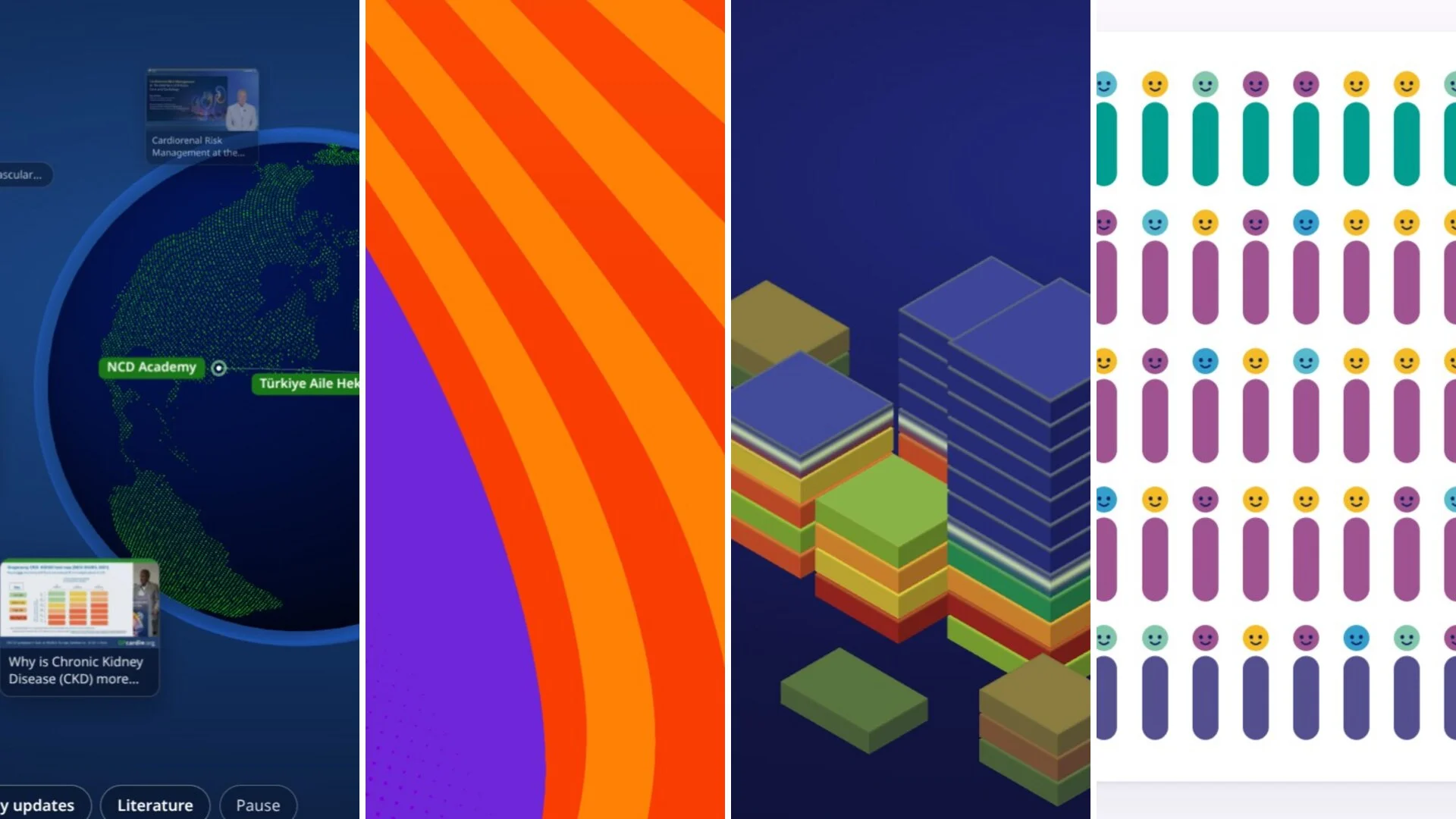
gpcardio.org is the Global Primary Care Cardio Network: lectures, guideline updates and a scan of the literature on heart, kidney and metabolic care, for general practitioners. The home page is a globe of dots with the connected societies pinned on their countries. The newest lectures and updates orbit it as cards. Drag the globe and the world turns, tap a card and the lecture opens, pick a chip and only the videos stay. BAM, THE WHOLE WORLD! Now THAT is giving shape to a truly global ambition!
Artwork that runs
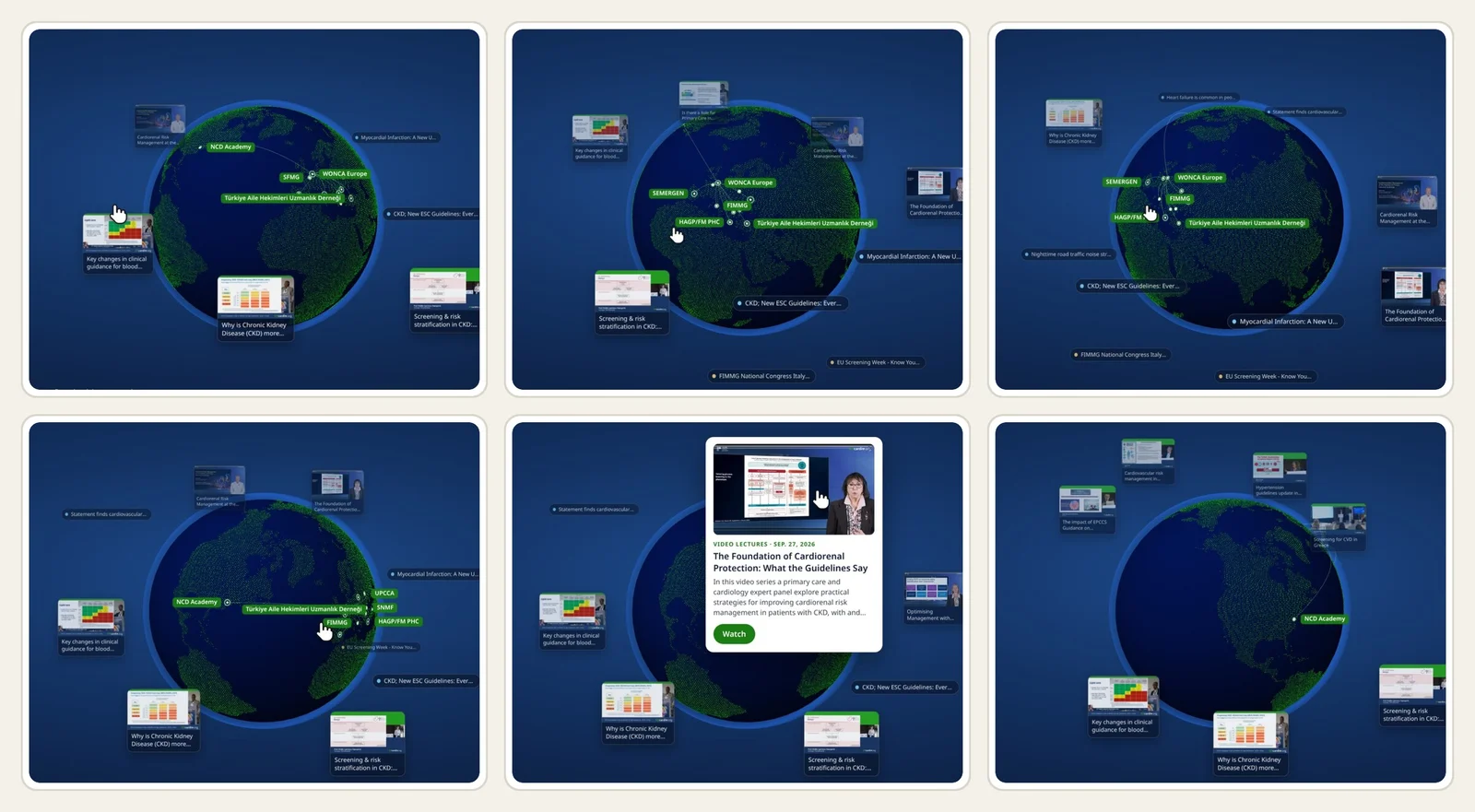
For a sports event I brought the designer's artwork to life, with 3D shaders and WebGL. At the start the lanes burst out of the oval, followed by confetti. The halftone dots respond to your finger or mouse, the lanes sprint when you scroll, the sports race to a finish line with a different winner every time, and a giant clock counts down to the opening day. The live drawing matches the original artwork for 99.3% of its pixels, but is at least 300% more fun thanks to the interactivity!
Buildings that build themselves
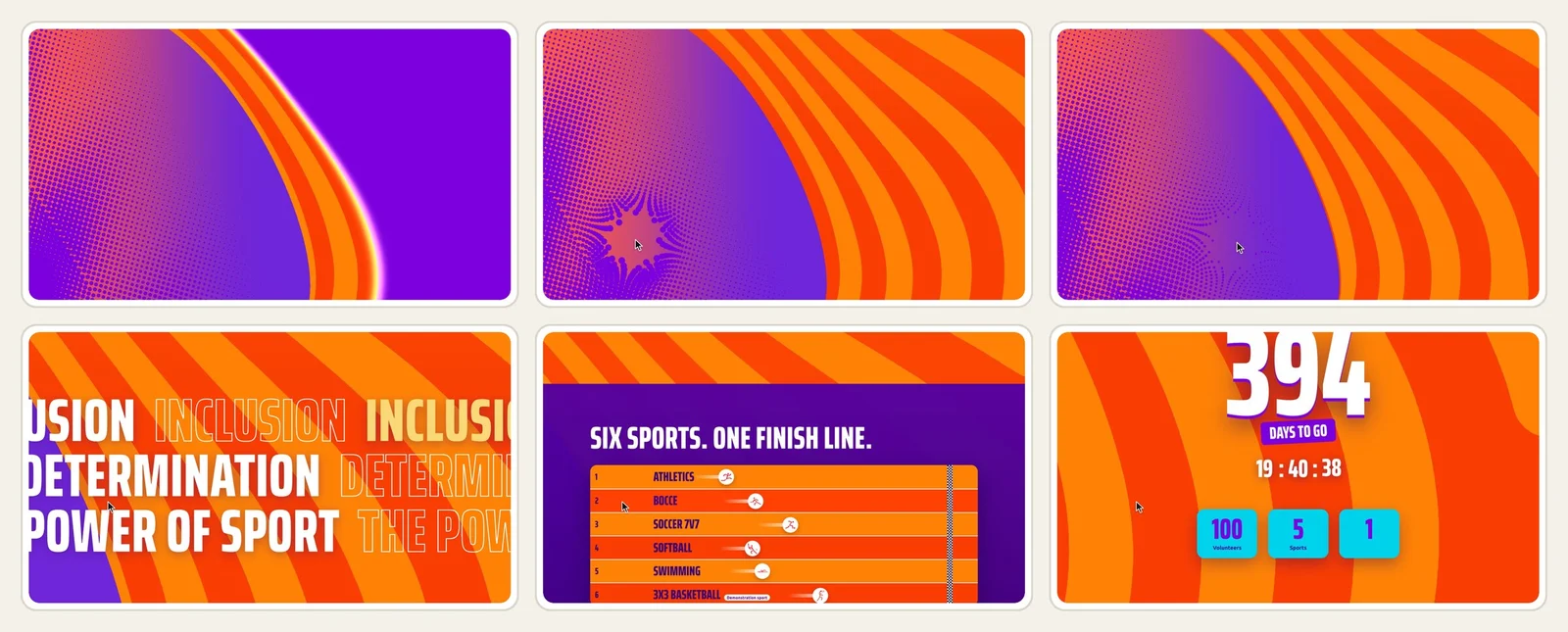
For an engineering consultancy for buildings and installations, four towers drop in floor by floor. A scan line then colours every floor by its condition, and the picture settles in green roofs: the sustainable end state. Move your mouse and the scene turns with you. Further down, all services run along the building process on one horizontal track, and three rings slide together as you scroll. Dynamics in fixed assets? NO PROBLEM!
Little people
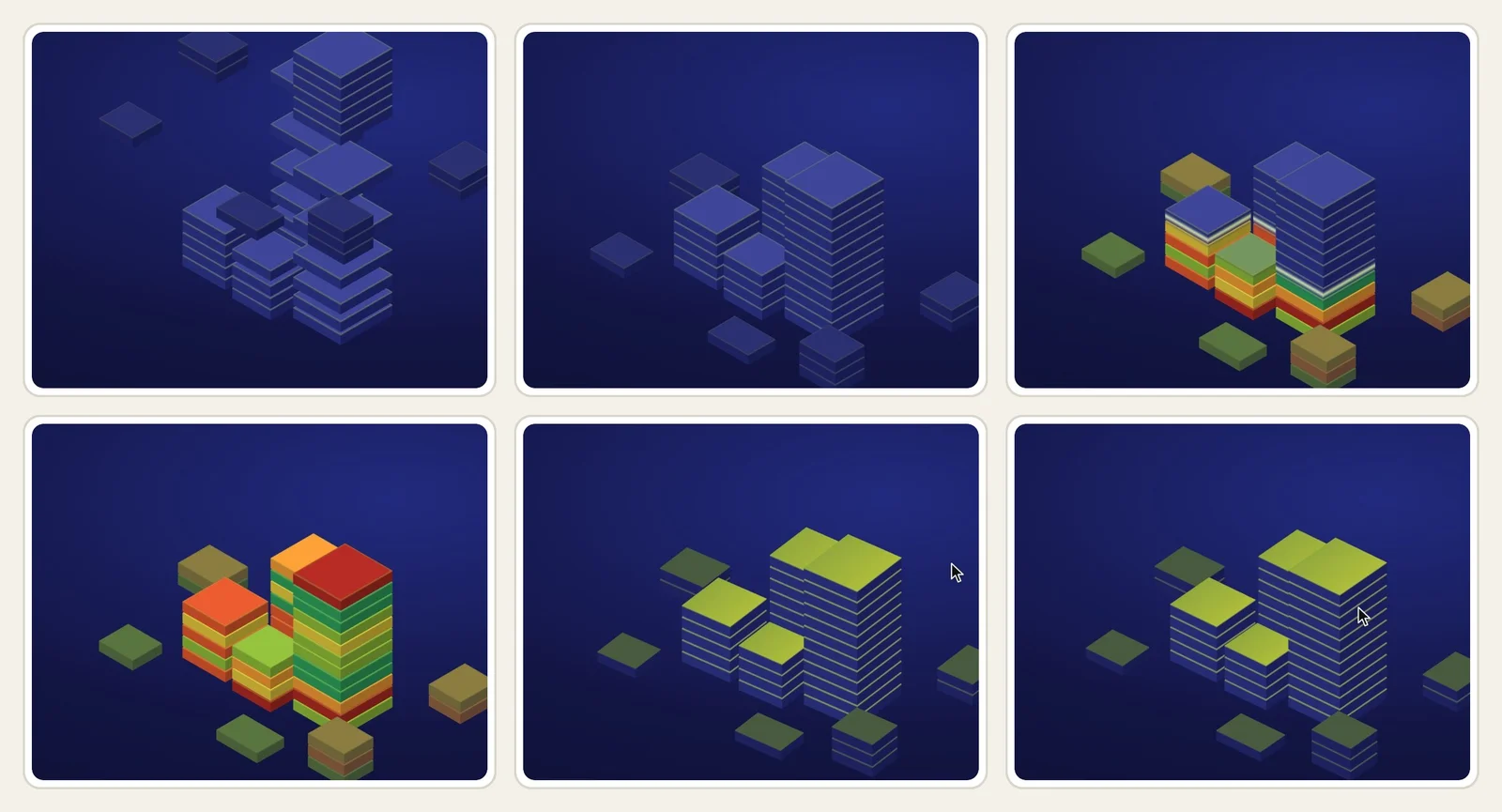
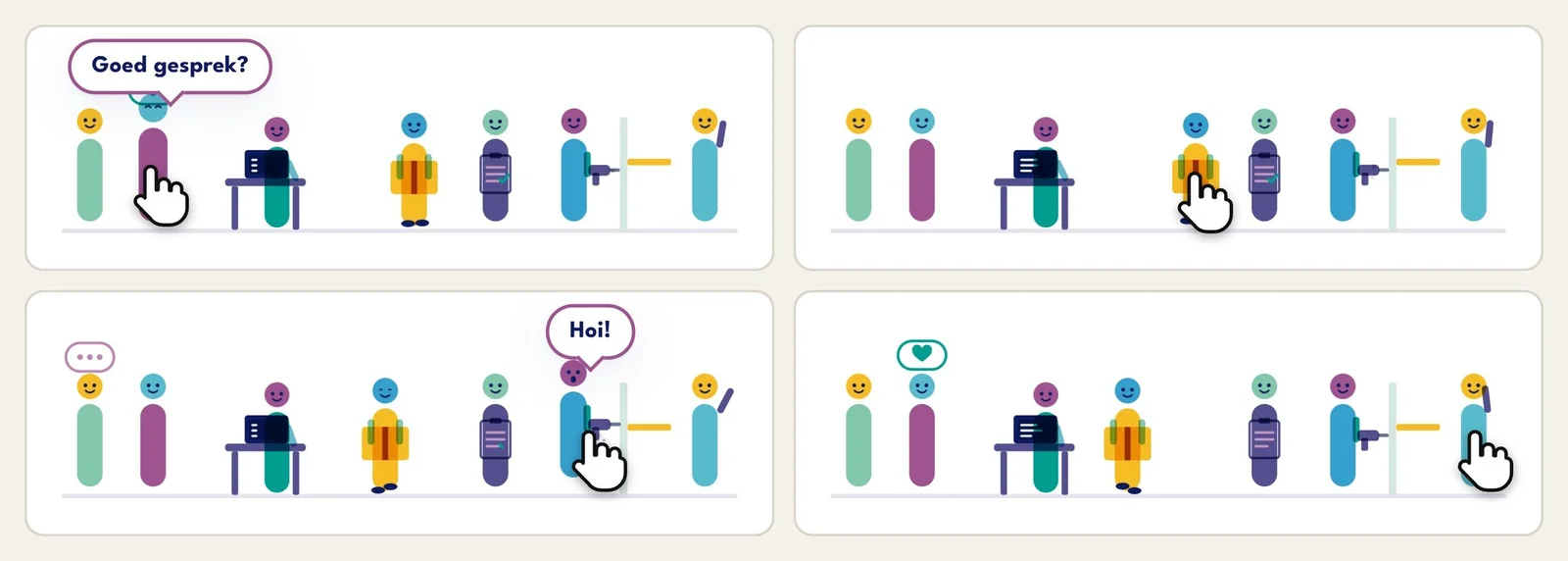
For an occupational health service I gave the person in their logo a face. Hover over one and it peeks, tap it and it jumps, dances or faints and gets up again, with something to say. They rain into the page as you scroll, and a whole crowd sorts itself into 20, 60 and 20 percent: absence with a medical cause, with personal circumstances, and with a cause in the organisation.
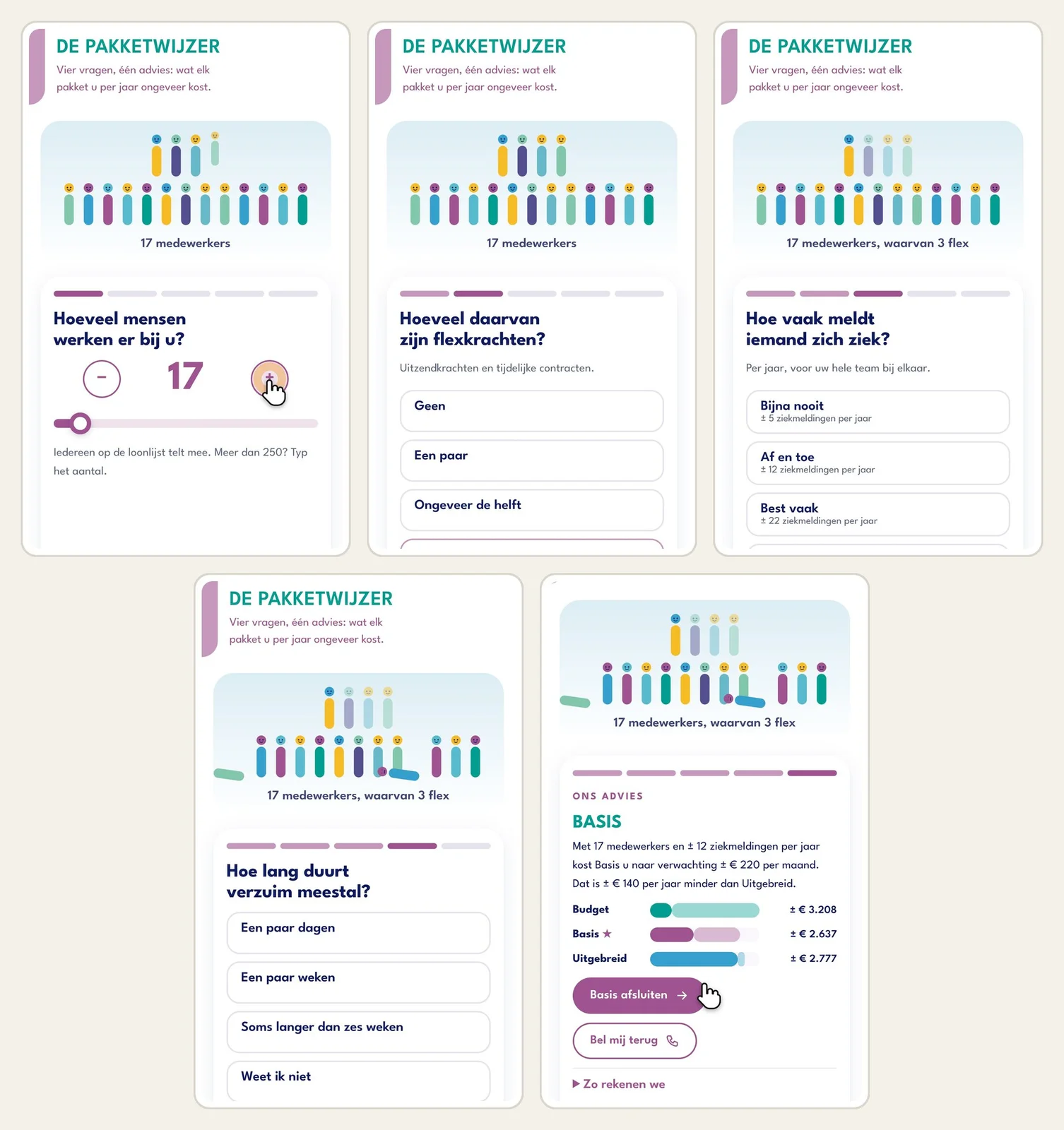
The package advisor asks four questions. With every answer the little people change: more colleagues, flex workers, and whoever calls in sick lies down. The advice shows what each package costs per year, and you can take it straight to the sign-up or ask for a call. Illness and absence are no fun, but a little figure toppling over is all the more hilarious, and that very smile gives an otherwise serious proposition its positive impact.
Fast while it moves
I build this on years of experience with game technology: from Snake '97 to Protect Your Eggs, a game I built with my seven-year-old, and workout data in 3D. The 3D scenes are drawn in a worker beside the page, so the page itself stays free to respond. They draw only when something changes and rest a second after the last touch. The little people are plain SVG and CSS. Behind every 3D scene sits a still picture, for the first paint, for phones that cannot draw it, and for visitors who prefer less motion. No framework and no third-party script: the three concept pages weigh between 0.15 and 0.46 MB.
Measured with Lighthouse, the tool behind Google's PageSpeed Insights, performance on the home page, phone / laptop:
| Performance | Largest content (phone) | |
|---|---|---|
| gpcardio.org | 96 / 100 | 2.9 s |
| The sports event | 99 / 100 | 1.8 s |
| The engineering consultancy | 100 / 100 | 1.4 s |
| The health and safety service | 99 / 100 | 2.1 s |
Lighthouse 13.5, median of three runs per page, 18 and 19 October 2026.
Conclusion
Is it fun, too?! That is what a wise professor kept asking me at University. I now apply that 'lesson' with a lot of pleasure: interactive webdesign is more than a little decoration. It is about optimism and a lasting impact that plays on natural curiosity! Would you like to think about the creative possibilities too, a page people want to touch? Feel free to send me a message!