Writing · 19 Jul 2026
80% Is Better Than Nothing
Ship it, learn from real feedback, iterate
80% is better than nothing. Whether we clean the bathroom, write content or deliver software. I wrote that line in my notebook this month, after a few weeks in which unfinished work turned out to be my best work. Not because it was good, but because it was out there: real people used it and told me what was missing. This post is about shipping in order to learn, and why perfect is the enemy of good.
Perfect is the enemy of good
We always thought of perfection. That slows you down enormously. A thing that is 80% done and in the hands of the person it was made for teaches you more in a week than a perfect version teaches you in a year, because the perfect version never leaves your desk. The last 20% is where the doubt lives, and doubt does not ship.
The lessons I learn from the 80% work I delivered this year are gold. Two examples. A planning tool for a family business and a tool that turns a quote into a PDF. Neither are top creations. But the impact is enormous, with more in sight. Why? Customers feel heard. They get attention, and the feedback that comes back gives direction to the next step.
Ship to learn
The feedback you need is rarely about the code. In July I put agenticfirst.nl online: a site that explains to shop owners what a shop window for AI assistants is, and why they want one. The first version was 80%. The reactions were not about the pages, they were about the words: people asked what it actually was. How do you explain the value of a cutting edge technology to someone who has never seen it? You cannot work that out in private. You publish your explanation and watch where it fails. Every question is a rewrite, and every rewrite is a better product.

Real data beats opinions
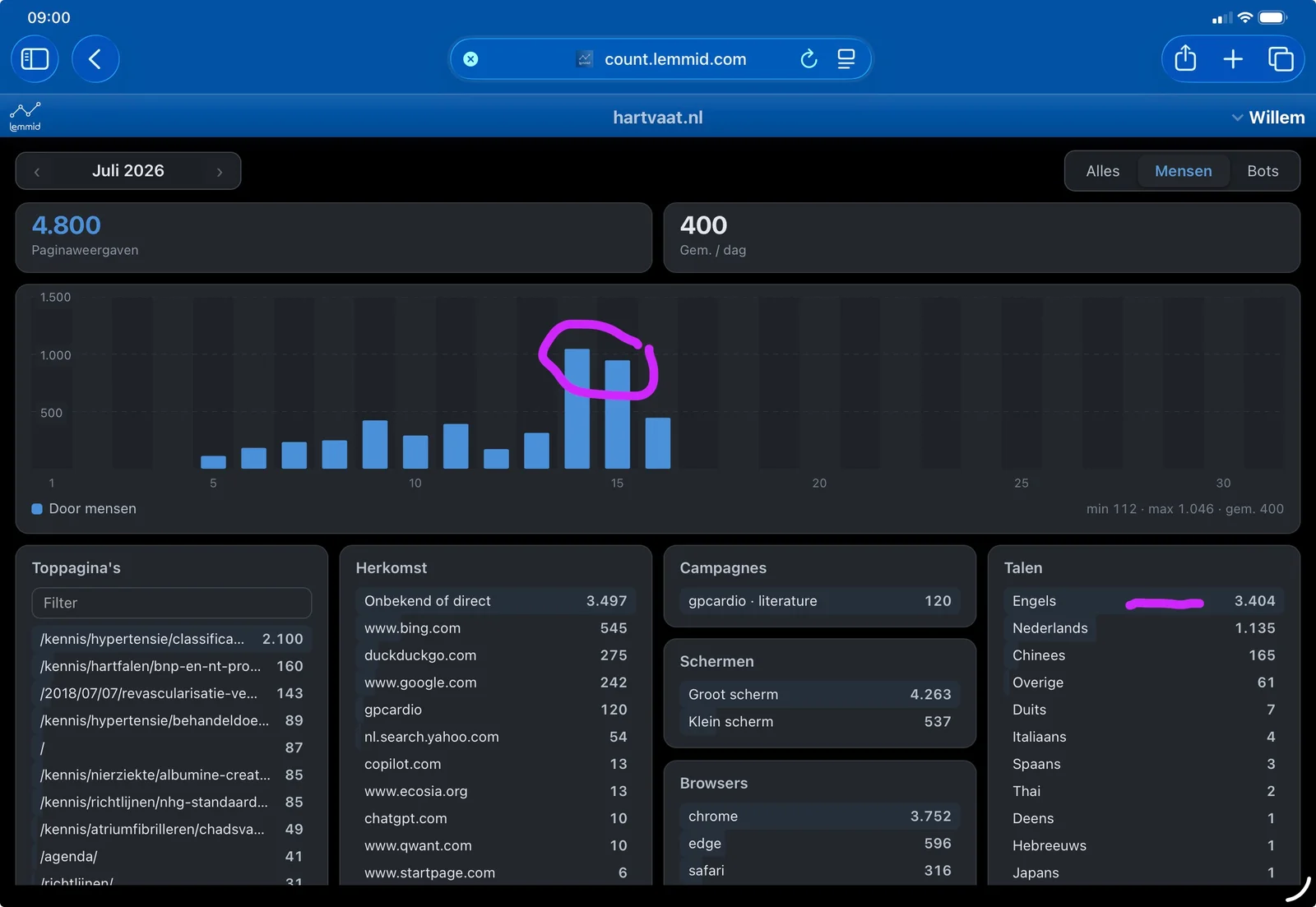
The best example this month is Lemmid Count. It went live on 5 July with a first classifier for bots and humans. Within a day a fleet of crawlers answered with behaviour I had not imagined. The purple circle in the screenshot below is a spike I did not trust: too many pages, too neatly spread, all in one language. I trained the classifier on exactly that signature. Two weeks later it was at version nine, every rule calibrated on real logs from real sites, and every upgrade recomputing the history. Had I waited for the perfect classifier, there would be no classifier. Reality is the only test set that matters, and you only get to run it by shipping.
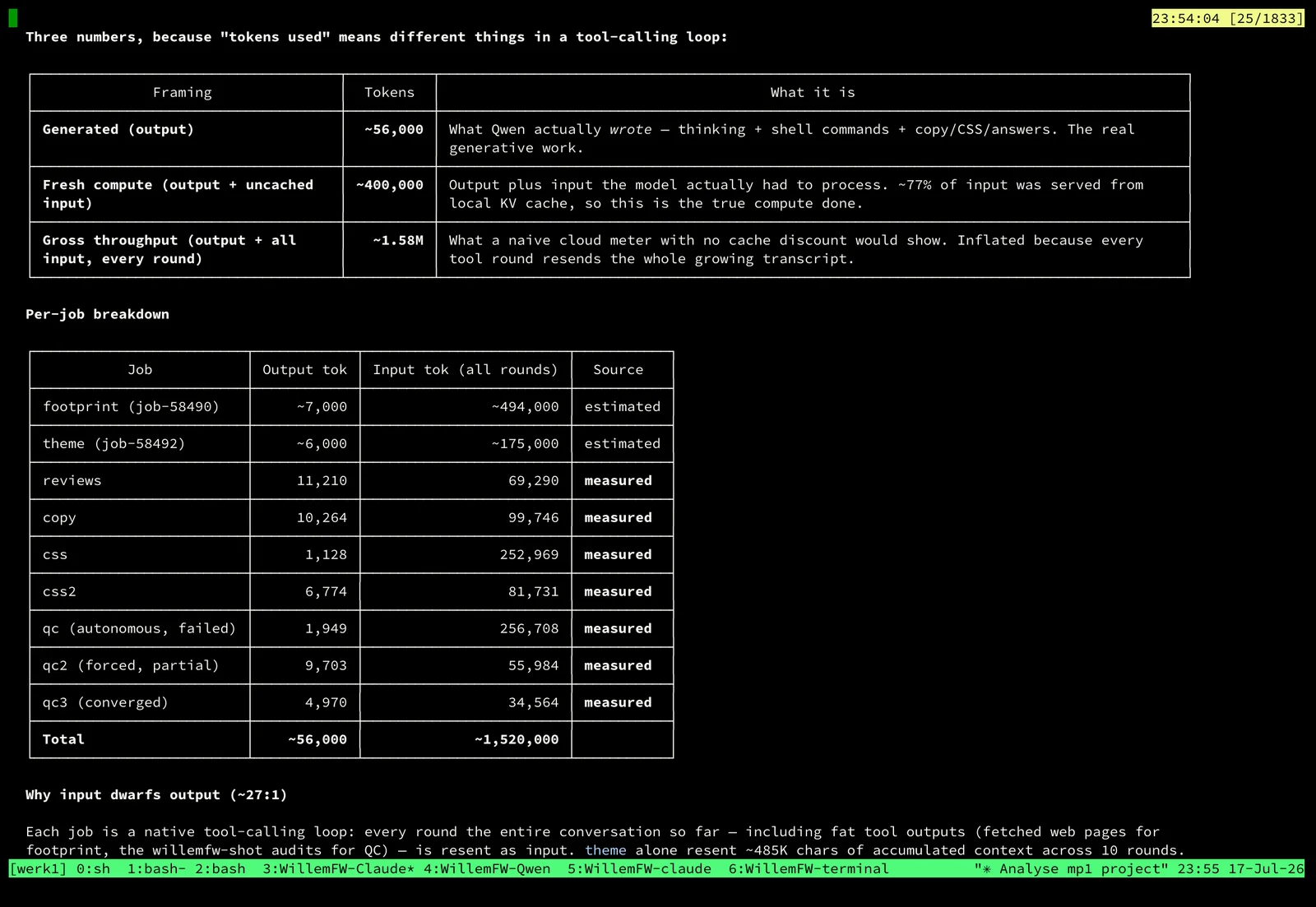
The same goes for the agents I work with. On the night of 17 July I sat with three terminals open, running the same jobs on different models and measuring what came back: tokens in, tokens out, and whether the result was any good. You do not know which model is good enough for which job until you run them side by side on real work. It is the agentic loop again, now with the agents themselves as the thing being iterated.
Speed bootstraps
Sometimes speed is exactly what an idea needs. Six websites in ten days did not happen because I had a finished publisher, the publisher got finished because six sites needed it. The first version of hrlm.blog, a local news site, was built on the train to Amsterdam on 14 July. It was imperfect and it was live before I arrived. On holiday I built two more sites and four are in option. I gave a partner everything he needs to sell my work, with a demo, and I find that uncomfortable because doing it myself works fine right now. Still, I think it is smart: a new market I cannot reach on my own. And even if he sells nothing, we do not get dumber. His questions make the product sharper.
The seeds are planted. They need time to germinate. That is not a reason to plant fewer.

It is OK to fail
Shipping at 80% means some of it will not work. I wrote about Master of Change last year: balance is not found by resisting change, but by adjusting to it. Rugged flexibility, hold on to your values and adapt everything else. A failed iteration is not a verdict, it is data. The only real failure is refusing to learn from it. I learned that the hard way in a marathon in the heat: the plan was perfect, the day was not, and adjusting mid-race is what got me to the finish.
There is one exception, and it is important. 80% is not an excuse for sloppy foundations. The backend I keep hard, that is the fundament we stand on. It is the things on top, the pages, the tools, the words, that are allowed to be 80% today and 90% next week.
Conclusion
Ship it. Not because it is done, but because it is the only way to find out what done means. Real feedback, real data, real people. Iterate from there. Perfect is the enemy of good, and good, in the hands of someone who needs it, beats perfect on your desk every single time.
So what is the 80% thing you have been sitting on? Publish it this week, ha!