
Writing · 9 Feb 2026
The Best System Is No System
A blank canvas, an old archive and one evening with an agent
Experimenting with new technology sometimes means starting from a blank canvas: letting go of the structures you built over the years, such as a content management system, and re-imagining the world from nothing. This month I did exactly that, by accident, in one evening. A fifteen year old tool was rebuilt without any of my systems, and what came out changed how I think about all of them. This post is about that evening, and about what I learned by temporarily letting go of my own rules.
A dead end
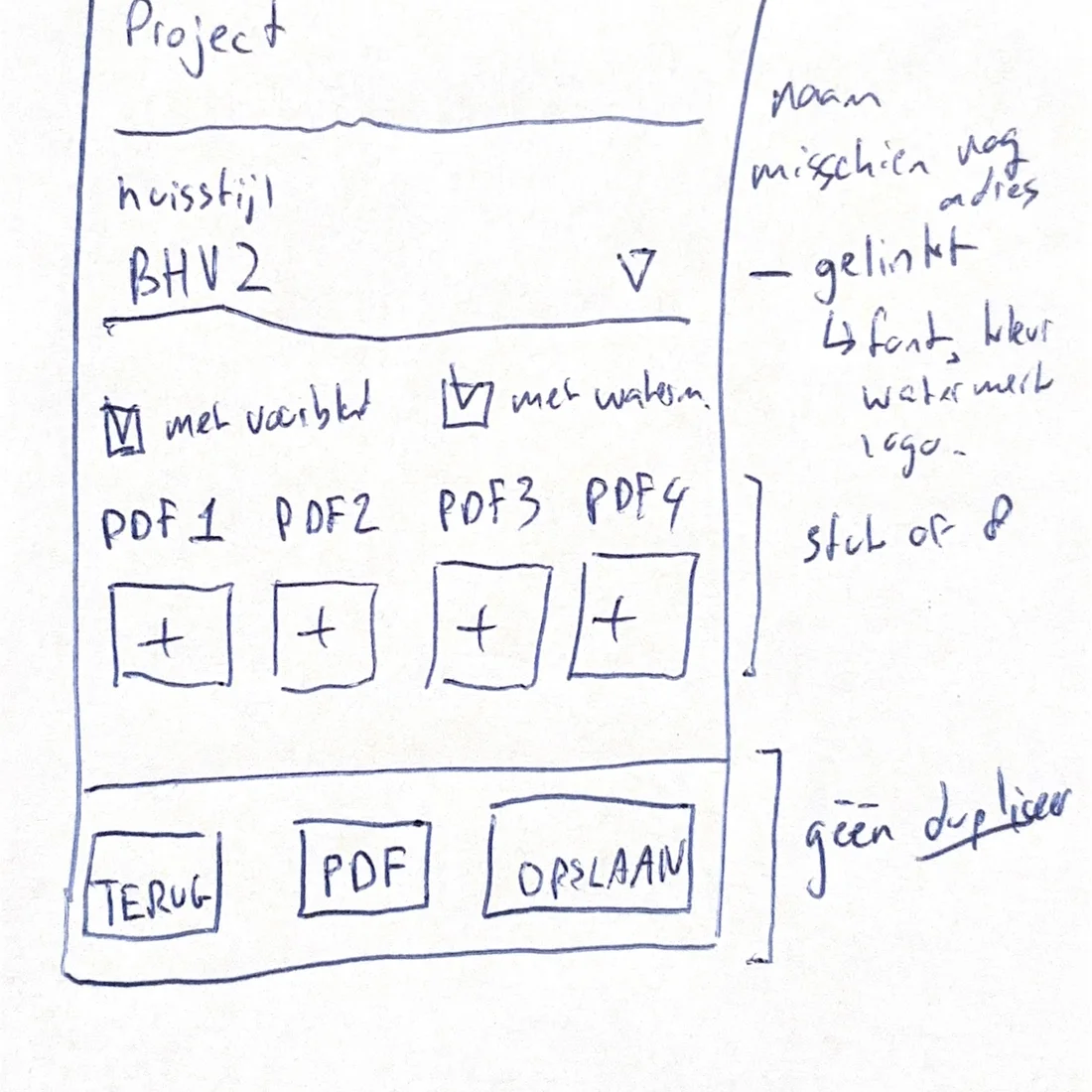
For a painting company I maintain a small tool that turns a set of PDFs into one quote: a cover page, house style, watermark, terms and conditions. The original dates from my .NET days. This year the customer wanted it back, better, and my plan was obvious: build it into the Lemmid Manager, my platform, as an action button. Where it belongs. On 9 February I hit a dead end there. Actions that run scripts need a place to run, and I had no good answer yet to where and how the working directory is determined. A rather important problem, because everything on that path has to agree on it. I had spent days on it.
An old archive
So, out of desperation, I did something else. I dug up the old code from an archive, a working program in clear, statically typed code, and asked the agent to make a web version of it. A better prompt was not possible: a complete specification that already ran. A simpler program was probably not possible either, it has a head and a tail. Then I let go of everything I would normally add: no object model, no web server configuration, no database plus filesystem, no platform. A blank canvas.
One hundred percent client side
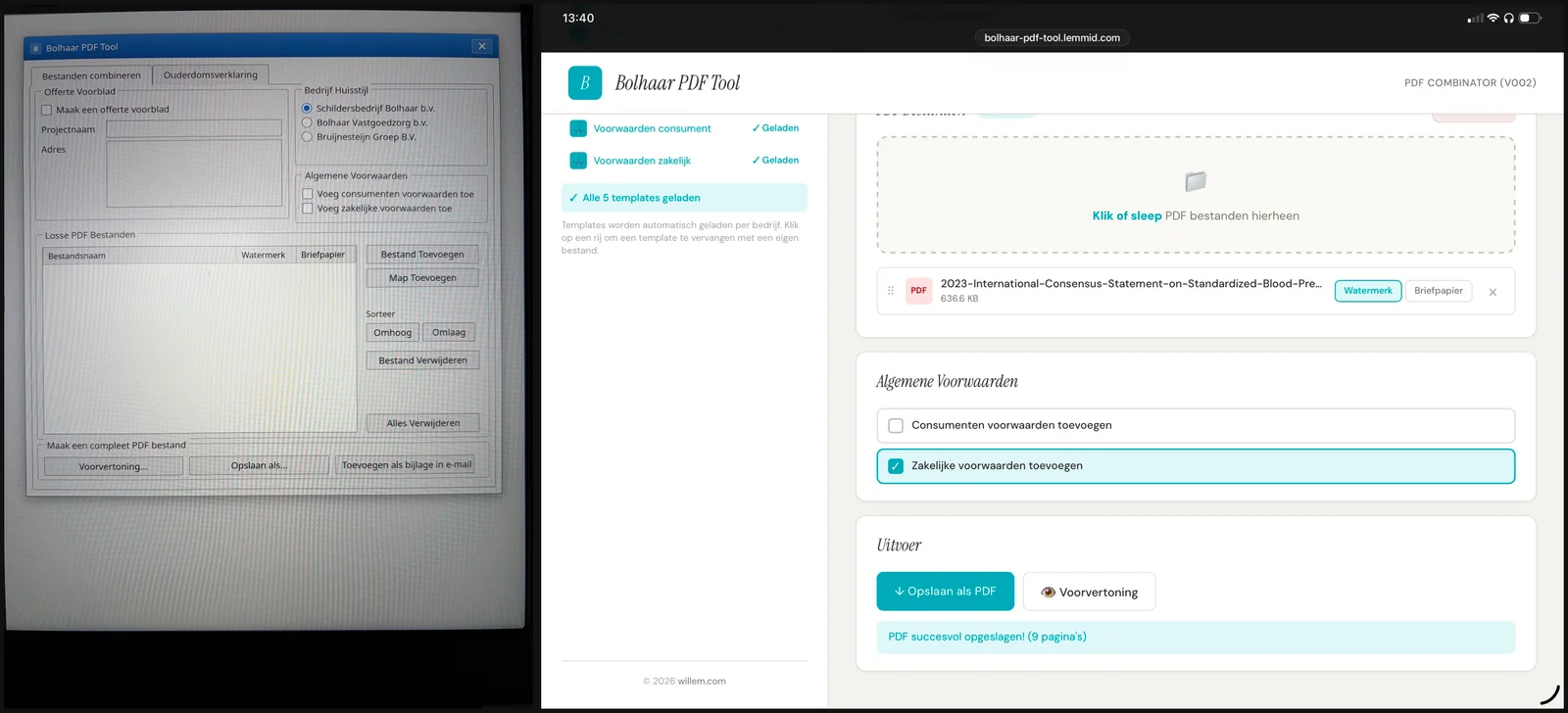
The result was better than I could have hoped. Not just faster: better in design. The heavy lifting runs entirely in the browser: a client side session, a hardcoded fallback and some loose PDFs and TTF files. That is the whole architecture. Where the old tool needed a Windows machine and the new plan needed my platform, this one needs a folder on a web server. It went from a hypothetical delivery to shared screenshots and a planned appointment in one evening, and it has been in production since.
The best system is no system
The implications are seriously serious. The Manager is strong because of its soft blueprint model: a text field defines a bespoke application for a customer, on top of the heavier machinery of the static site generators. That was my way of delivering custom work fast. You can ask whether a model like this takes that advantage away. Looking at how fast I delivered custom work that evening, it is a foreshadow. I think there is a big chance that the next Lemmid Manager is no manager. A variation on an old rule of mine: the best system is no system.
I already had an example. The site of a chocolate bar I built last year is 100 percent static, and I never connected it to the content management system. Editing the HTML is as easy as logging in and running a publisher. If I am the product, the helper, I do not necessarily need the tooling. If anything, I should use the new powers of AI to think hard about making as many parts of my systems redundant as possible. The fewer moving parts, the better. Very extreme: could you do without a database? Could publishers run client side? What if the webroot is everything, a kind of embedded manager? Extreme ideas without implementation plans, but directions worth exploring now that I have seen how good an AI program can be. I understand this is not one to one applicable to something big and fuzzy like a whole platform. But cut the big and fuzzy into smaller, concrete pieces, and somewhere there is a tipping point.
Thirty-six hours
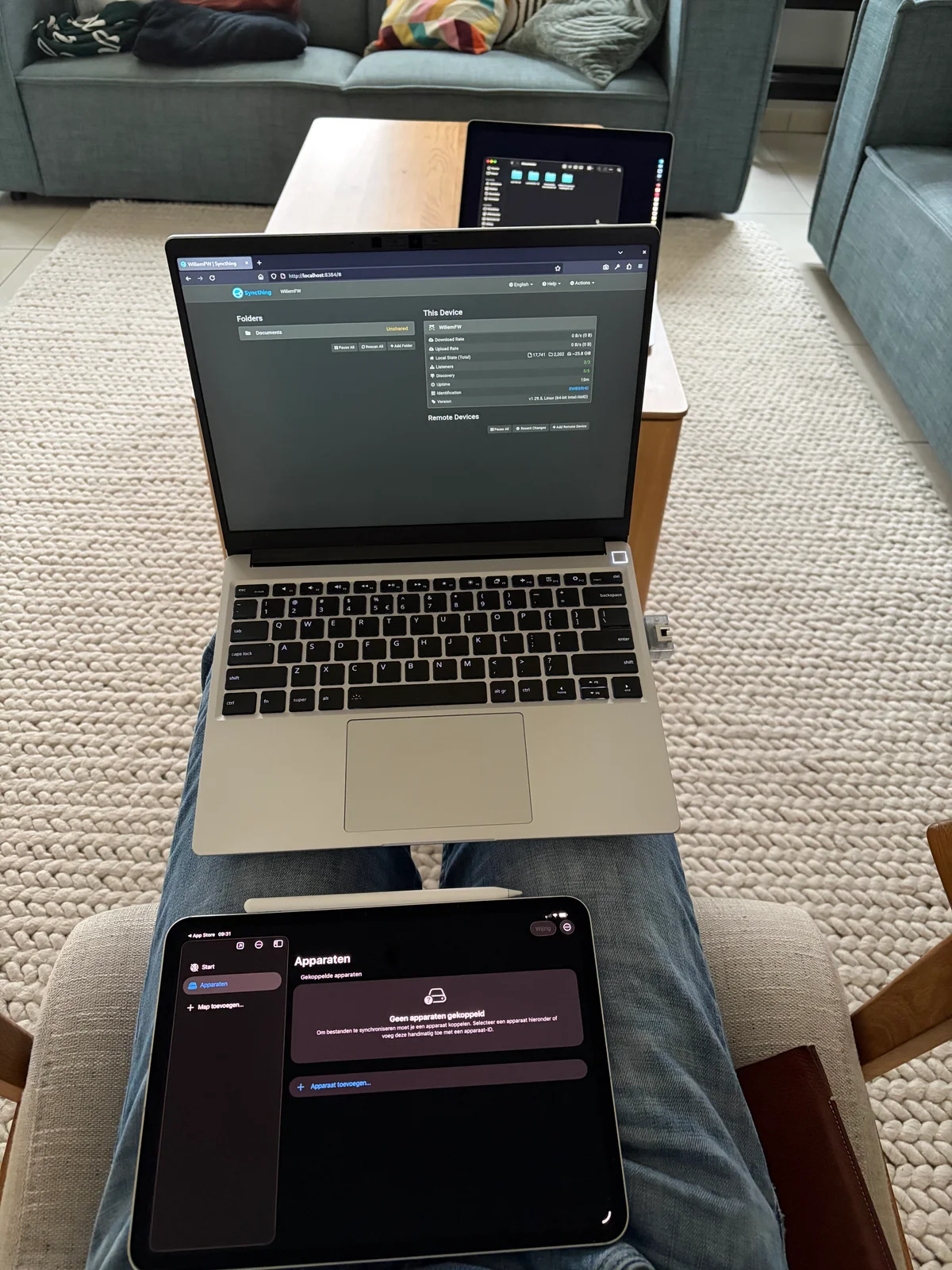
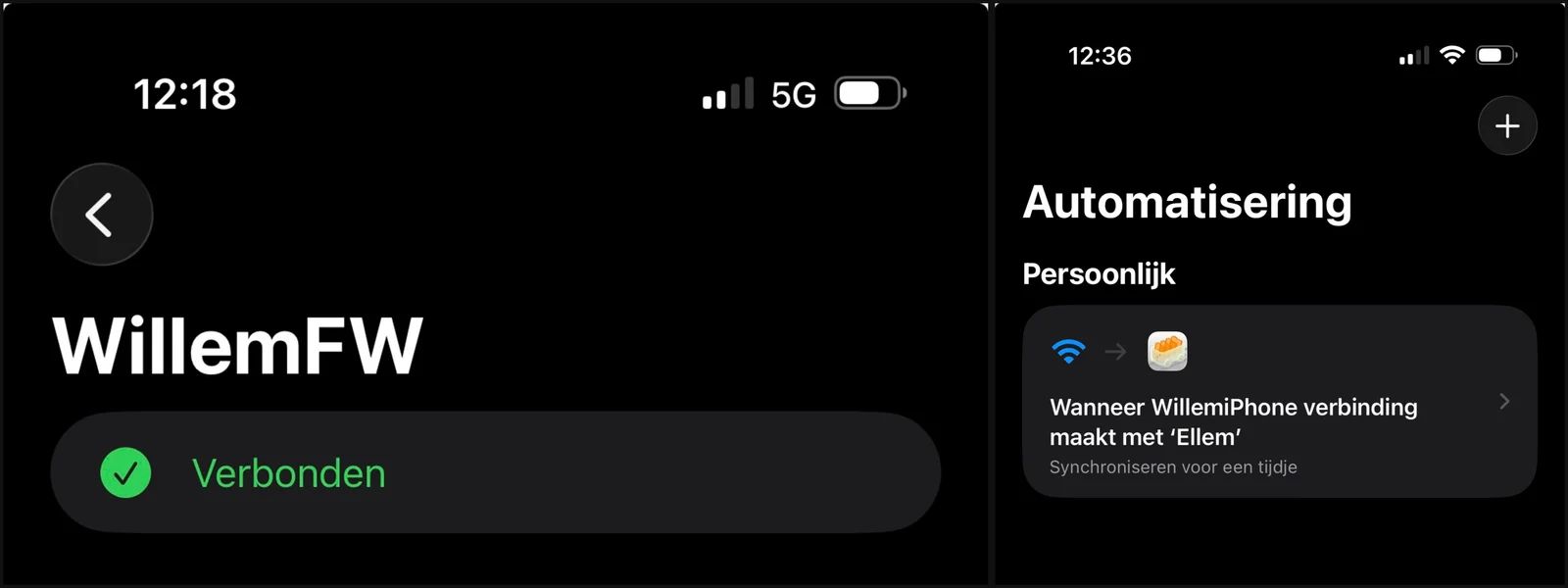
The evening did not stop at the tool. The magic made me aware that the Linux laptop is something great, and that I was selling myself short by working only on Apple devices. The next day, with the same agent, I set up file synchronisation between the laptop and the phone, then an automatic photo stream, and on the station platform that evening I confirmed it works over a hotspot. What I experienced in those thirty-six hours was nothing less than a paradigm shift. Not anti Apple, but a solid bridge between the Linux machine and the Apple gear, without an intermediate station. Ten days later that laptop became the agentic workshop I wrote about earlier.
Update, September 2026
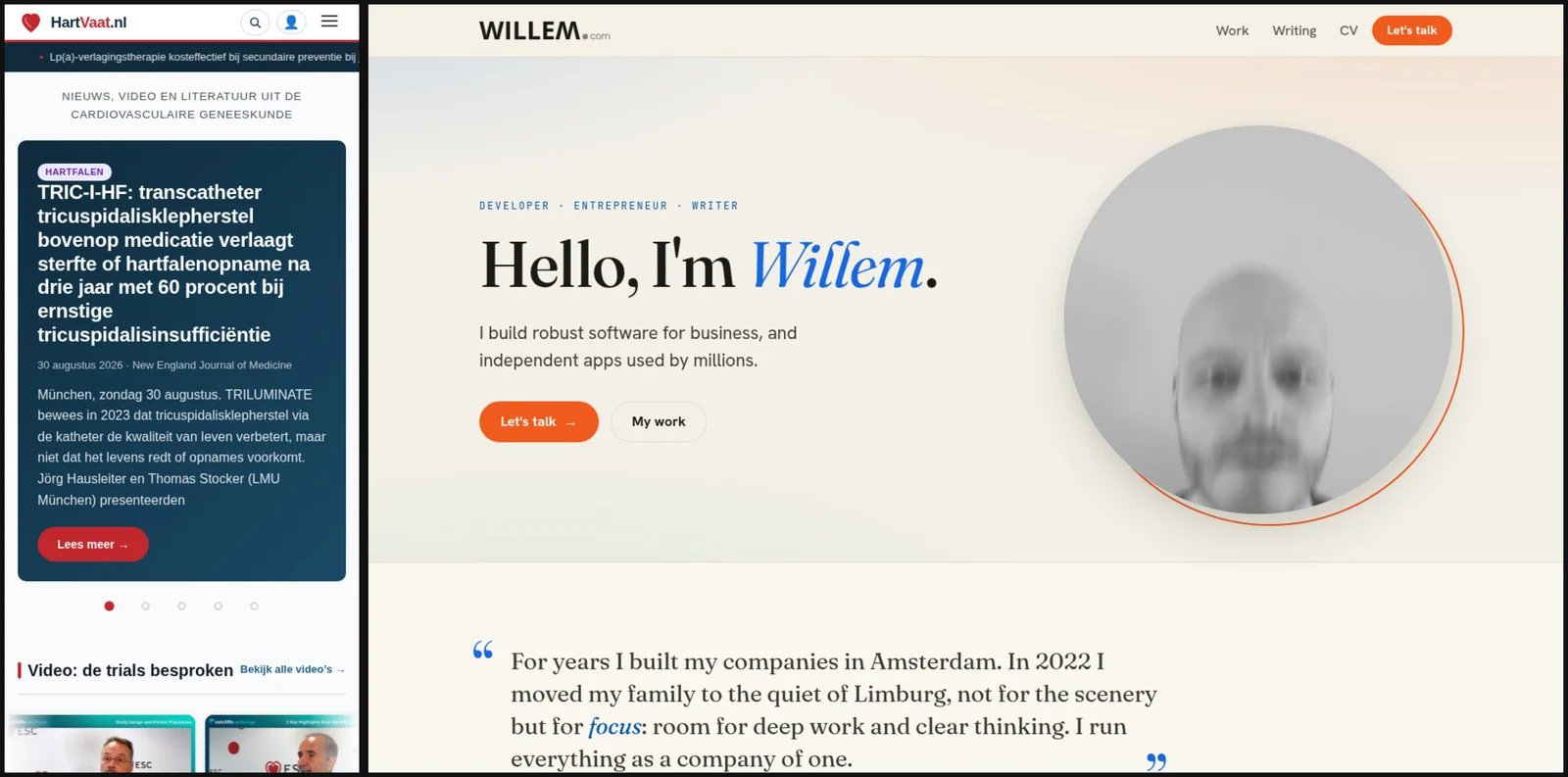
The blank canvas did not stay blank. Over the following months I reconnected this new, wild, amazing world to the structures a business needs to stay online for years. The idea that was born here, a check-in, check-out loop per project instead of endless chats, became MP1: a publisher that lives as a ZIP inside my own Manager, six websites in ten days and more than twenty-five since. The manager-less news site that was built the same month now runs on the platform, with its own statistics and a nightly editorial pipeline. The platform did not go away. It got smaller and stronger, and it now carries everything the blank canvas taught me.
Conclusion
The value of this episode was not the tool. It was the exercise: set out to learn as much as possible by temporarily letting go of existing methods and rules. Start from nothing, see what the technology can do on its own, and only then decide what structure the result deserves. Most of my systems survived that test. One of them became something new.
So pick a small thing with a head and a tail, drop every rule you have, and see what comes out. It might be a paradigm shift, ha!