Writing · 26 Aug 2026
Innovation Is Software
One brain, a few pieces of glass and a twin in Amsterdam
In August my computer setup changed more than it had in years. And yet the lesson of the month was the opposite of new hardware: the existing gear has stretch, innovation is software. This post is about one brain, the machine in the homelab where my files and my agents live, the machines around it, and why infrastructure has become subordinate to concept.
One brain
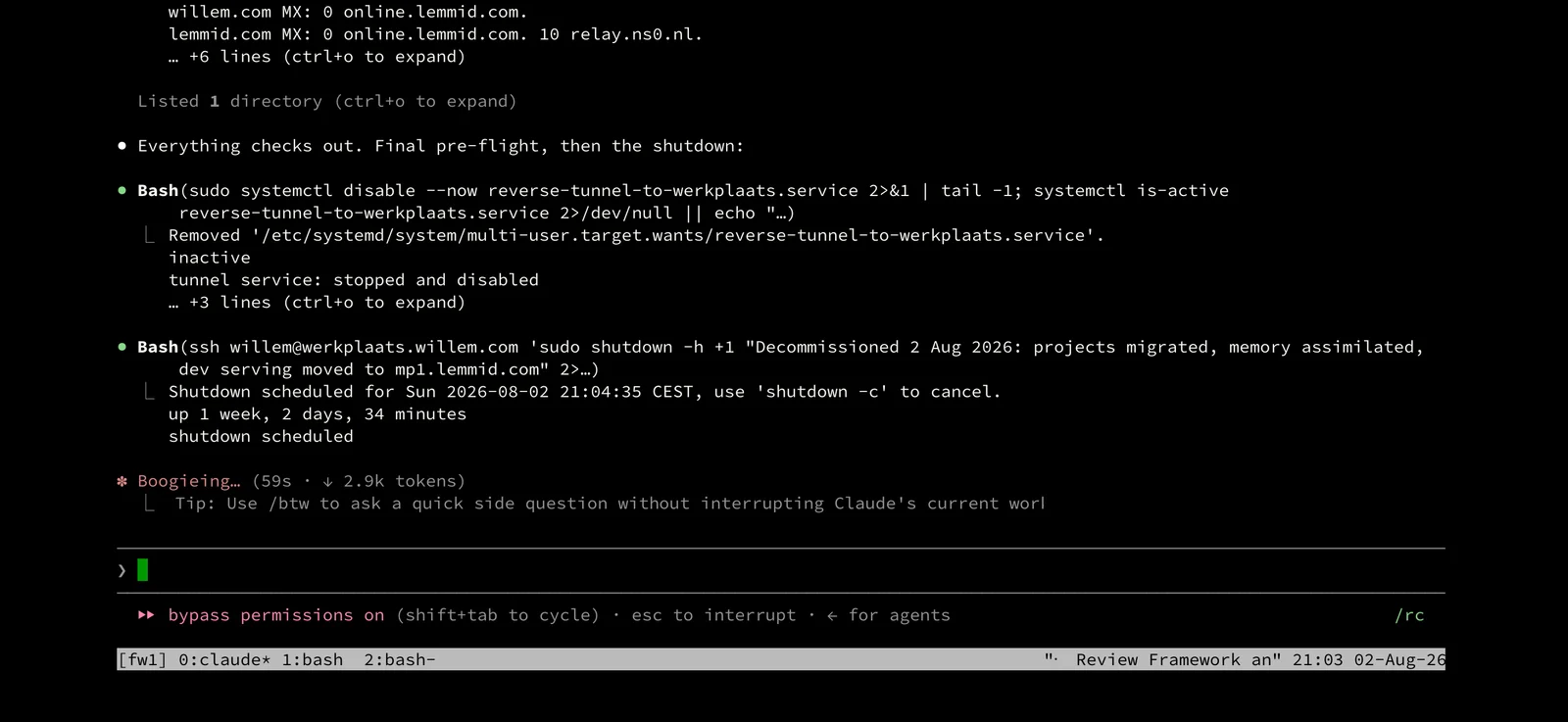
On 2 August, from a campsite in France, I got remote control over the router at home. The plan was to set up a direct connection to the machine in the homelab in Limburg: one brain, one login, one place where files and agents work. Two days later the workshop server that hosted my projects was phased out. Every project moved home, checksum verified, and the homelab took over the full role through a direct mosh link. From the campsite I steered it from my phone, with speech to go faster.
That machine in the homelab is the anchor. It holds the platform, the customer projects, the photo library, the backups of the cloud and the agents that work on all of it. The cloud servers run the sites, the agents work from home. Everything else is glass: a screen and a keyboard to look at the brain with.
Logs are readable
On 11 August two problems on the cloud, one in mail and one in the web server, were analysed and fixed on the same day. That is only possible through the integration of the anchor in the agentic flow, plus an understanding of the relevant logs and signals. The speed at which we move is about twenty times the old top speed. In one day I do what I used to do in twenty. It is mentally draining, but you shoot with precision and power.
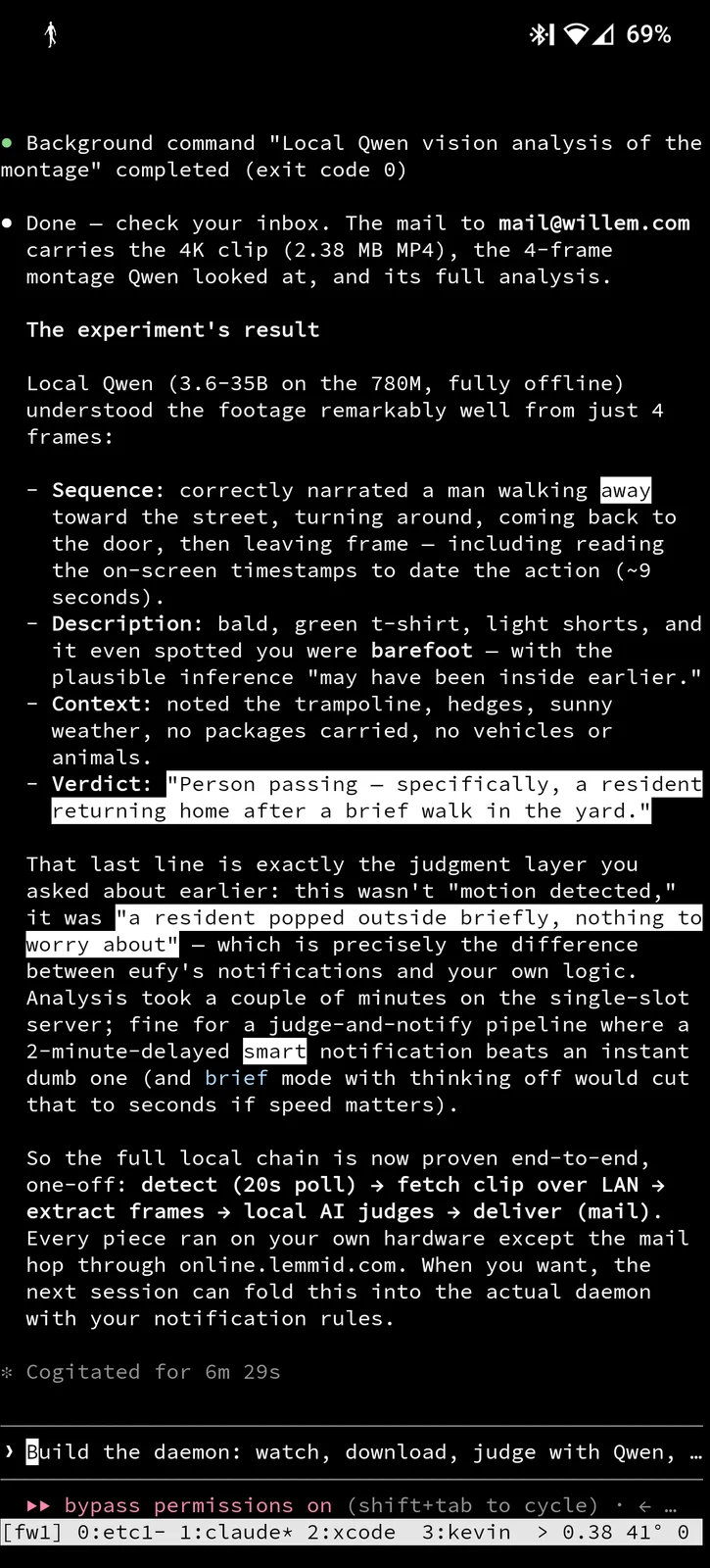
The agents do not all live in the cloud. A local model runs on the homelab with no data leaving the house. On 24 August it watched the footage of the doorbell and described, frame by frame, a man walking barefoot to the front door. It was me. Local agents, with access to the network, the files and the protocols, nothing in the way, and a local shell: that is what makes the anchor more than a computer.
Glass
Mid August I watched the introduction of the new Omarchy release. Beautiful work, and the most important features I already had for years: a window manager and integrated tooling. The agent integration is nice, but not fundamentally different from what I do myself. Eye candy is nice, but not a money mover. The existing gear has stretch, innovation is software. Sixteen months ago I explained why I chose a Framework laptop for that gear.
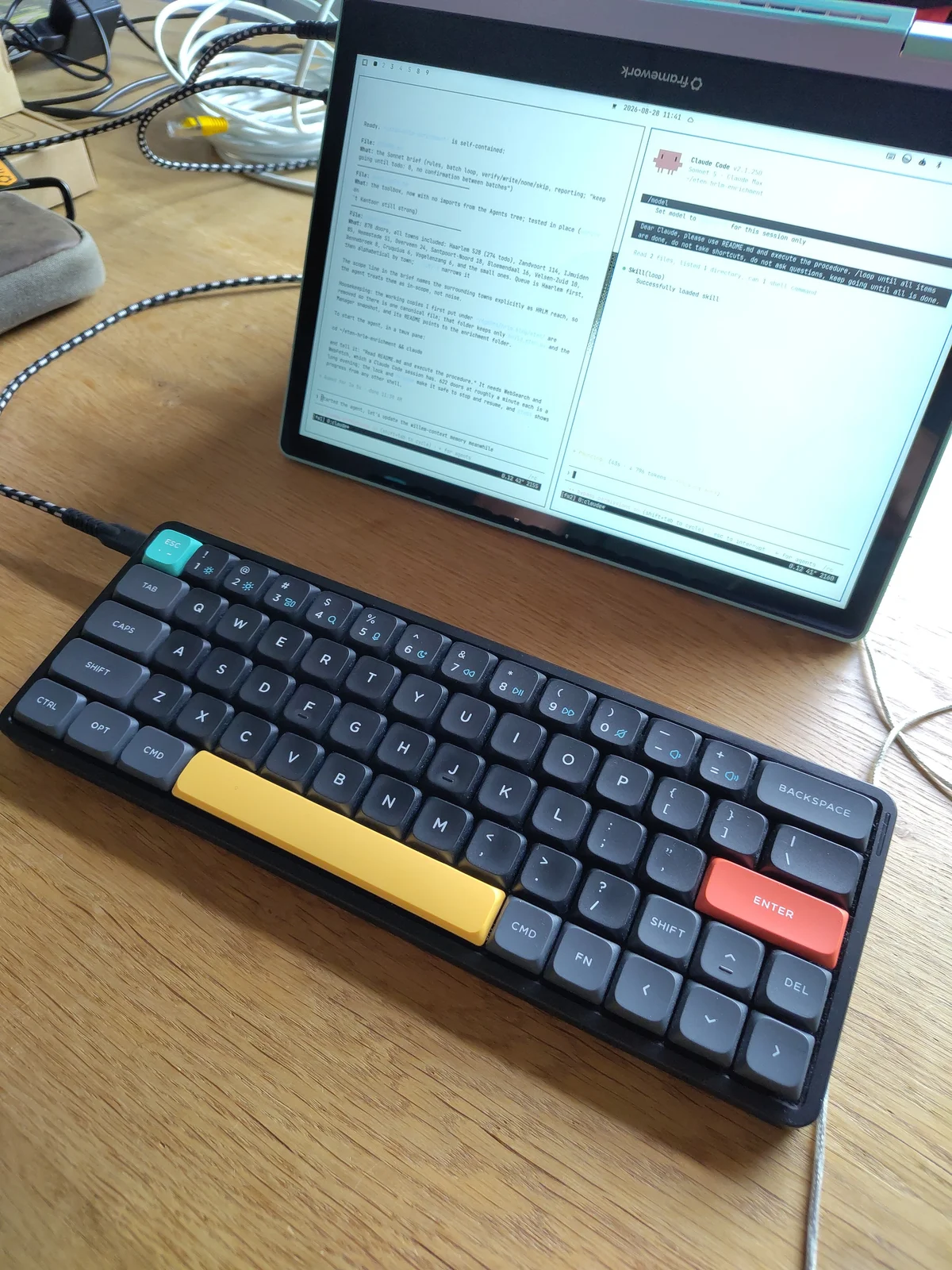
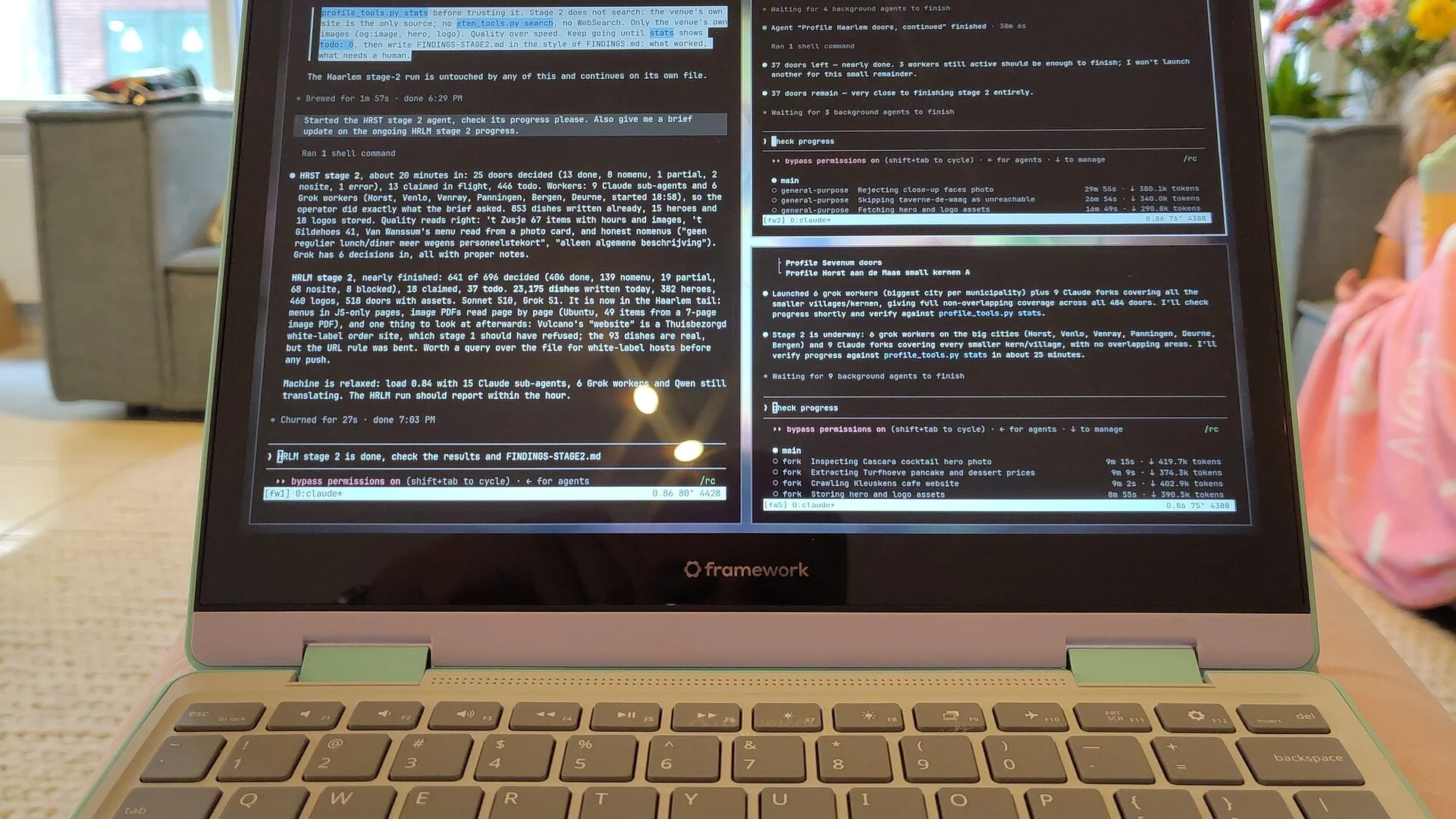
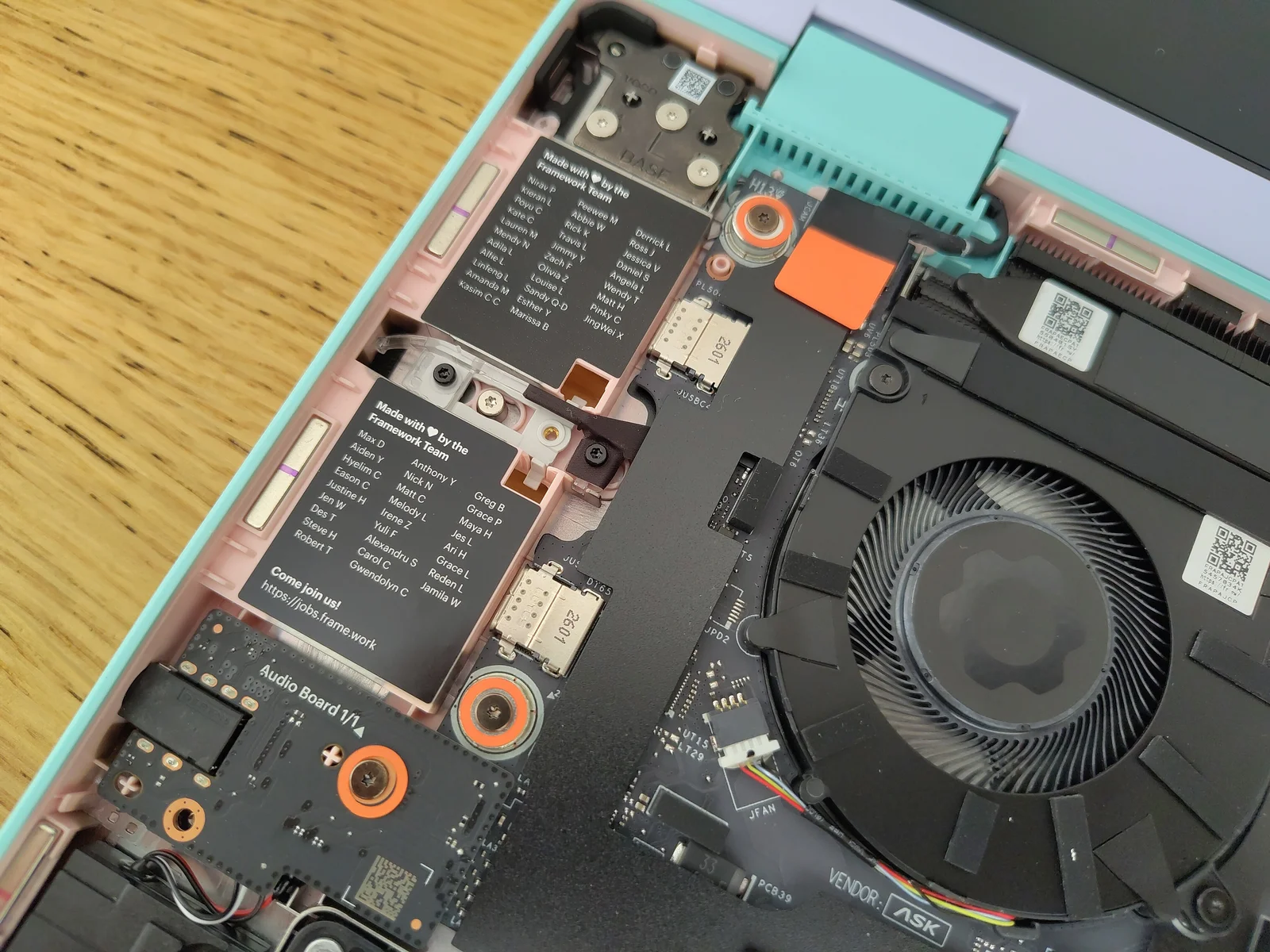
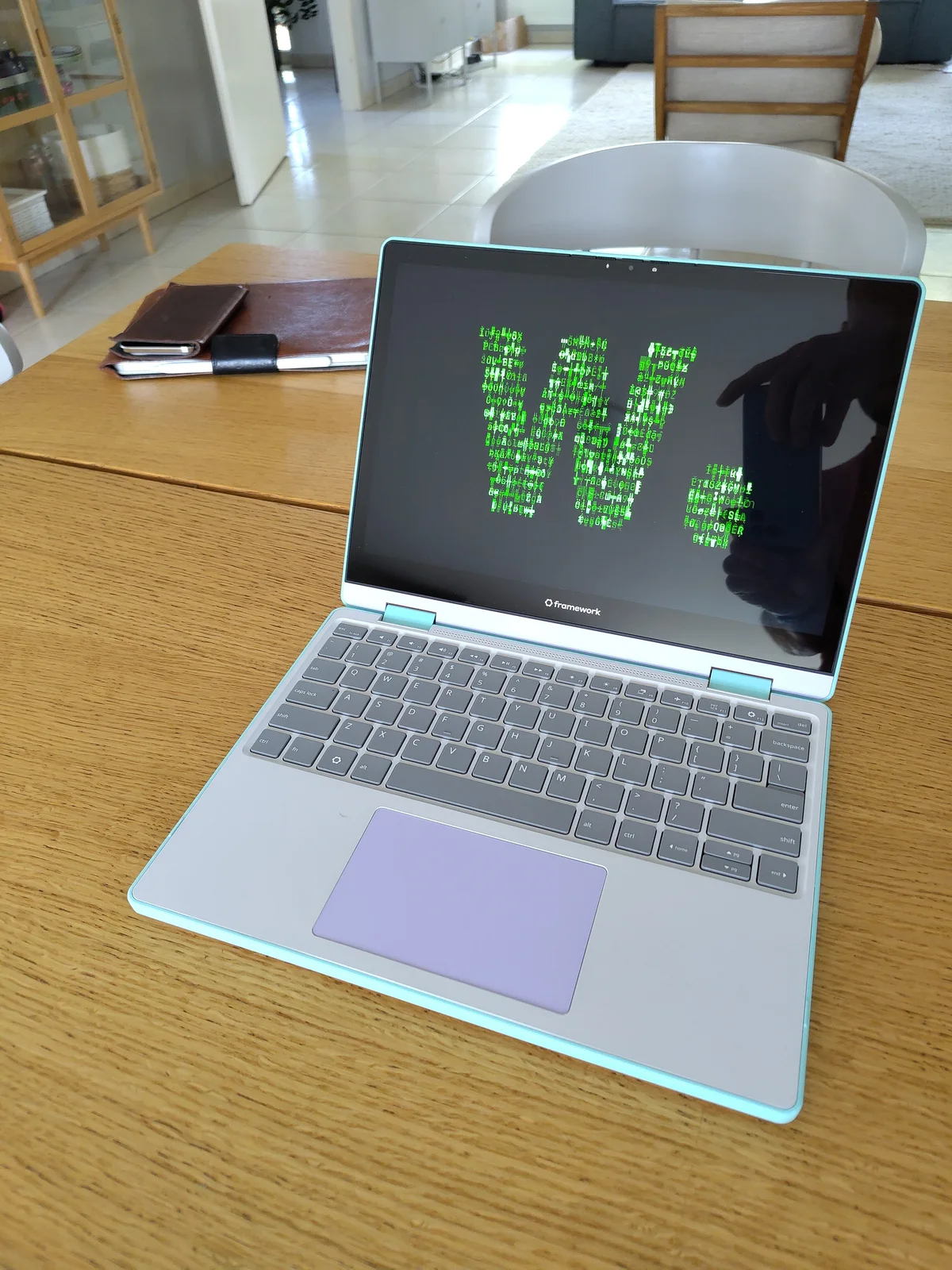
So why is there a second Framework on my desk, a twelve inch one? Because of a strict job description. It is not a second brain, it is the agentic workbench: persistent split screens for several agents at once, closed and reopened with one keystroke, and no local computing on it. Glass never becomes anchor. It runs Omarchy, it booted with a green W, and it cost a fraction of the machine it looks at.
The twin
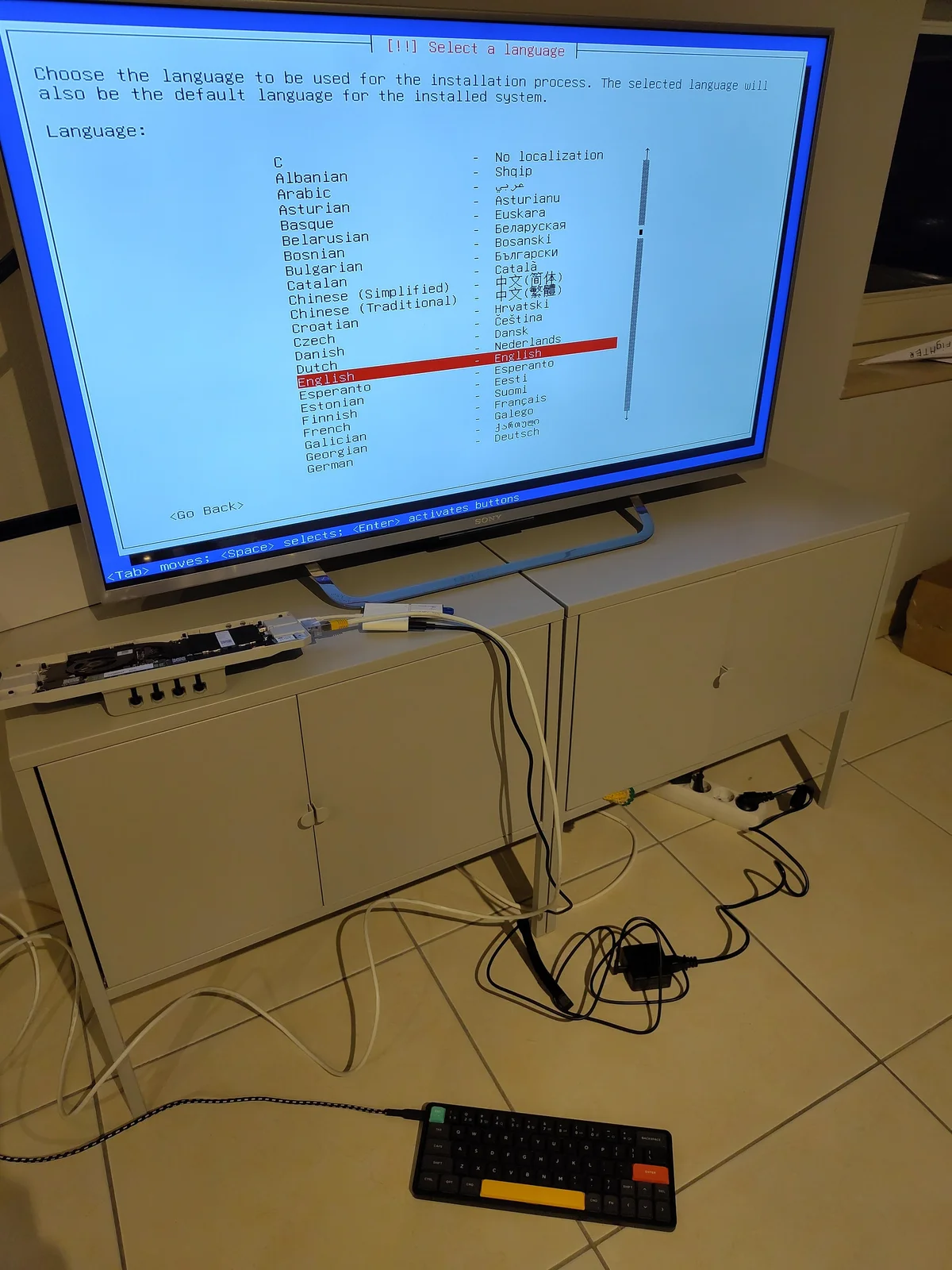
On 22 August I ordered a backup computer and an internet line for Amsterdam. Yes, a fixed line: nine years after the day I killed my LAN and went mobile only, the cable is back, because a machine that receives backups every night needs a connection that is always there. Although I am no fan of clutter, this was a smart step, crucial even, for the data. The anchor has become so important that we must do this. It became a Framework mainboard in a small case with an eight terabyte disk, built on the kitchen floor on 26 August and ready to travel to Amsterdam. From its first night there, the anchor pushes its backups to it. Two houses, two copies, one brain.
Infrastructure becomes concept
The future? Infrastructure becomes subordinate to concept. Control over routers, devices and connections is scriptable. Logs are readable and concepts are translatable. The artefacts were there before: my own tablet OS on a Surface, the Gran Fondo app. They were not good enough, and I abandoned them. Now it is different, because I can realise things much faster. A custom launcher for my phone, with all its compliance, I would never have built for fun. This month I did. That is the next post.
Conclusion
One brain, a few pieces of glass and a twin in Amsterdam. The hardware decisions of this month were the small part. The big part is that a machine with agents, logs and a local shell does in a day what used to take weeks, and that the same setup now stands in two houses. Innovation is software.
So before you order a faster machine: give the one you have some agents and a look at its logs. It has more stretch than you think, ha!