
Writing · 27 May 2026
Elfstedentocht on Feel
235KM through Friesland without a screen
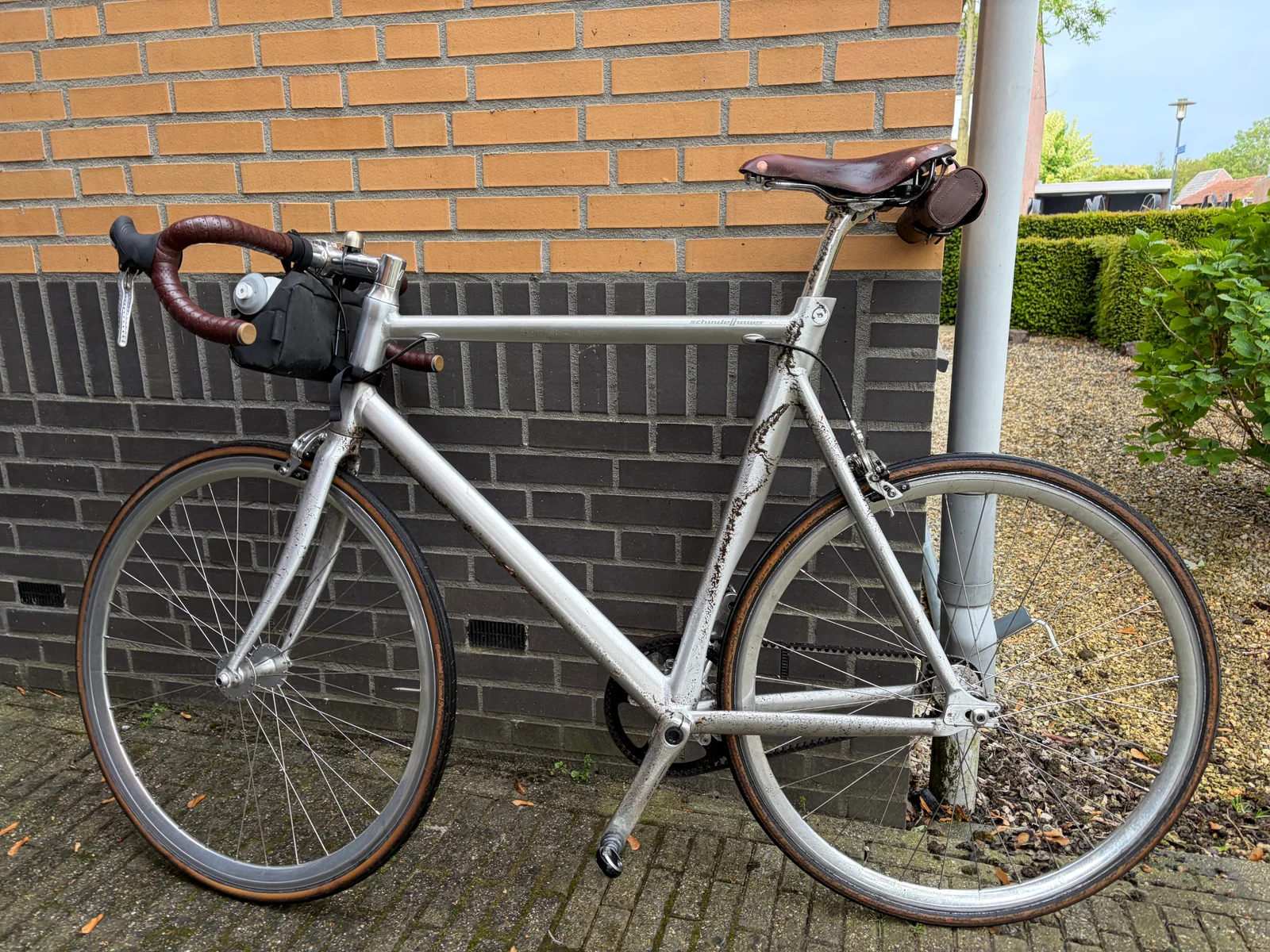
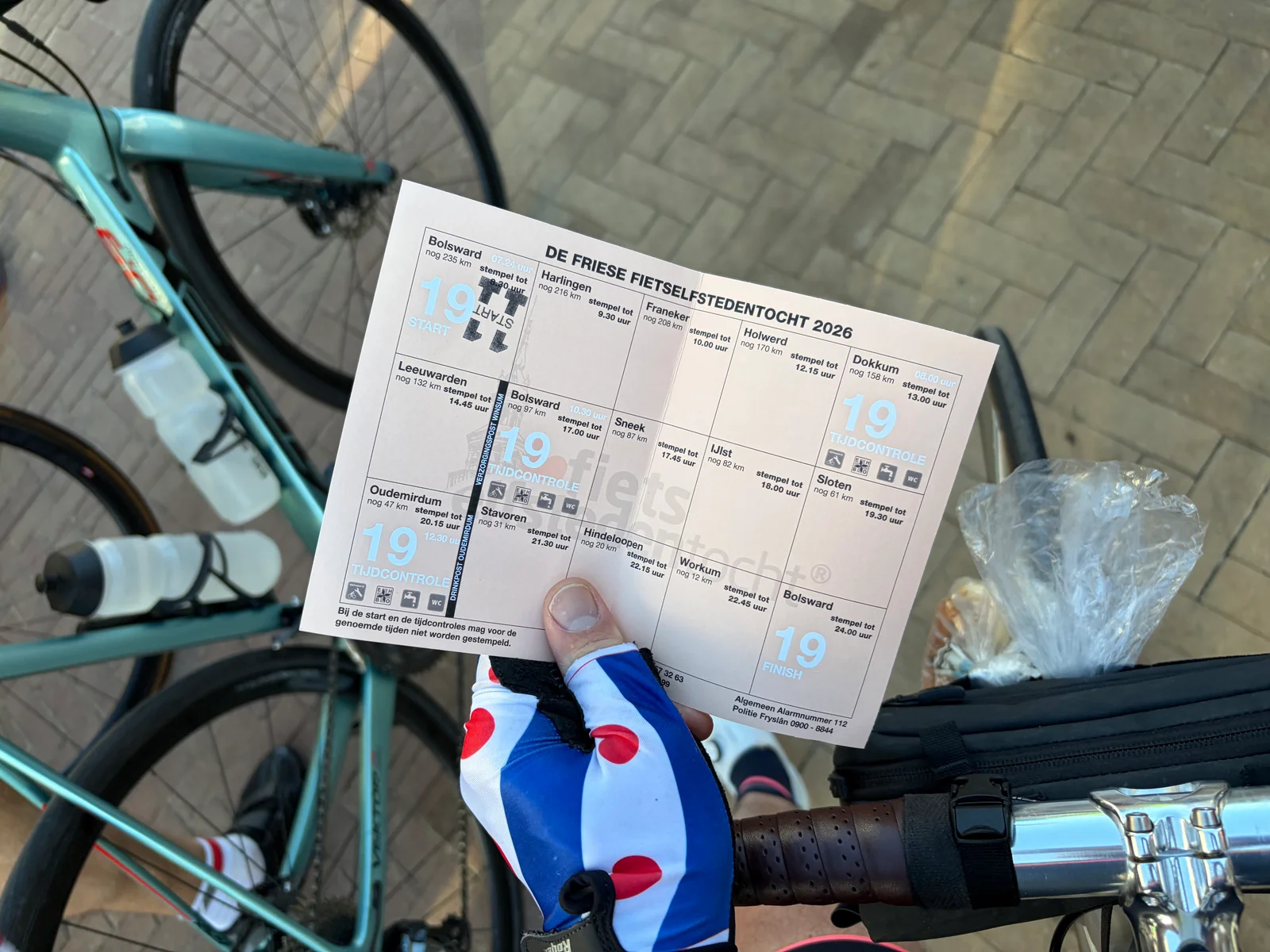
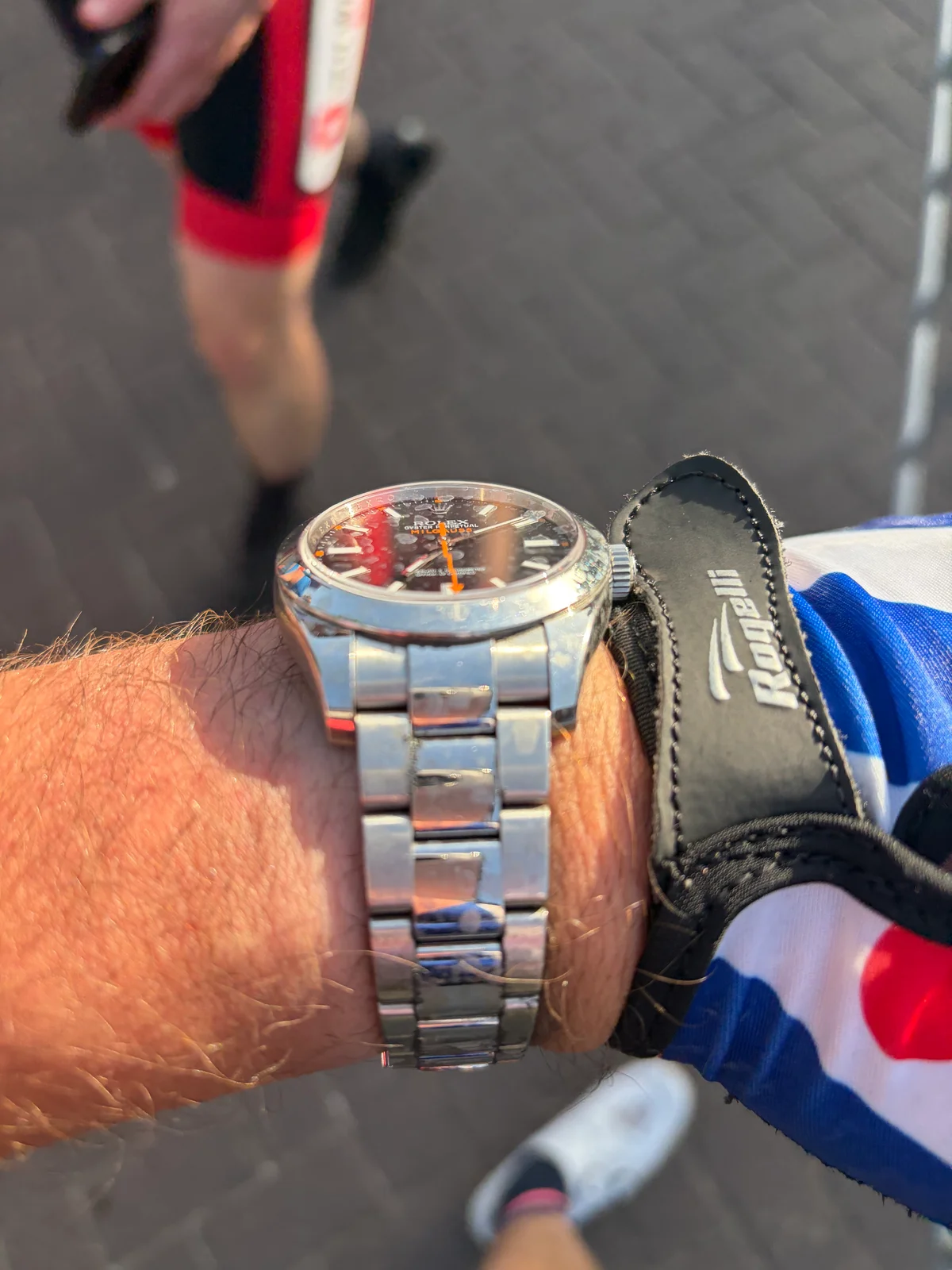
Last Monday I rode the Fietselfstedentocht, my hottest edition ever, on my fixed gear bike. No bike computer, no GPS, no heart rate on my wrist. Just a mechanical watch, a stamp card and my WHOOP quietly recording in the background. Eighteen months ago I wondered whether I could ever reach peak performance without data. This ride was the answer, let me tell you about it.
Warming up in a storm
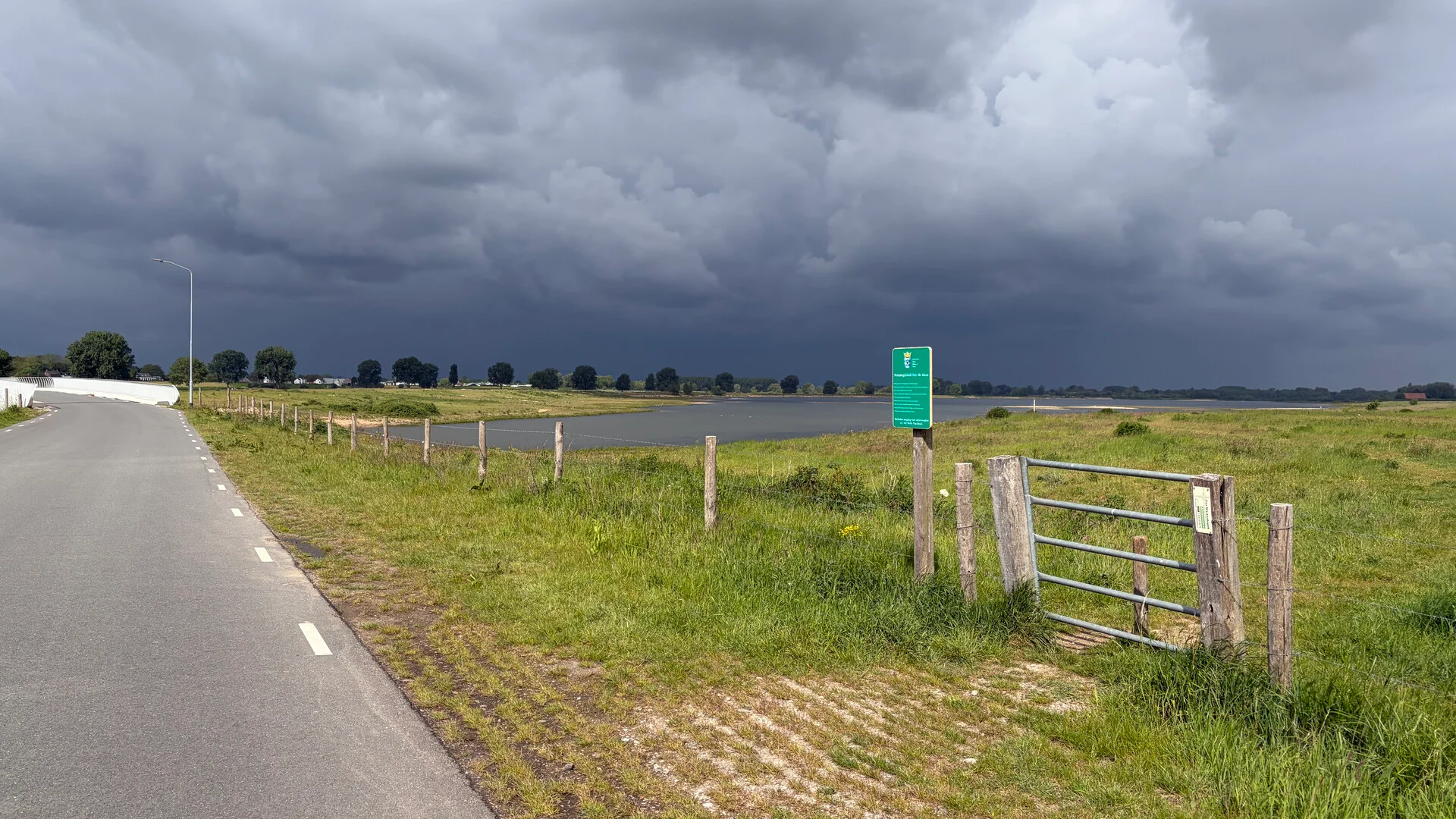
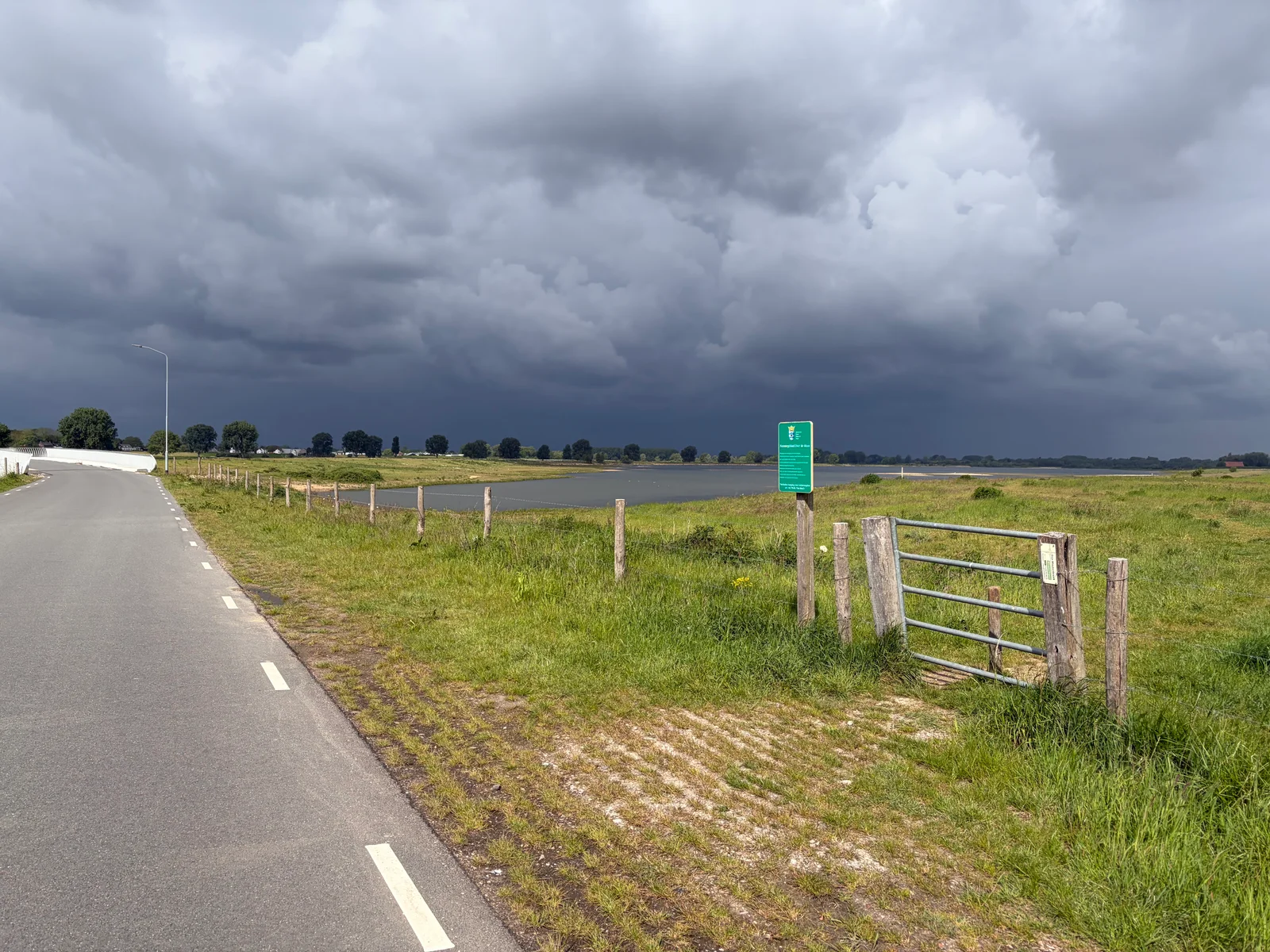
Two weeks before the tour I cycled from Amsterdam back home to Hegelsom, the reverse of the ride I described in 2023. Before I started I doubted for a moment whether I wanted a GPS track after all, maybe some power data. I decided not to and that was the right decision. It became my fastest crossing ever: 6 hours and 19 minutes, without a screen telling me so. On the ferries I talked to people: a guy in the same Rapha kit returning from a crash, two men who had cycled to Rome.
The story, the photos and the WHOOP heart rate afterwards are more than a dataset. The feeling of my body on the bike became even more high definition than before. I knew I could accelerate up a bridge. Or into the wind. Or overtake someone. And that in intense rain. Numbers are followers: they describe reality after it happened. The feeling tells me more about what is possible next.
The tour
I have ridden the Elfstedentocht many times, but this was the hottest one ever. A very intense ride, ridden entirely on feel. Many stretches fast, firm and long. Everything, the bike, the watch, the WHOOP and the drinking system worked within spec.
On a fixed gear you have exactly one gear, I wrote about that before. Several times the cadence was the limit: the trains of riders went faster than I could spin, over a hundred revolutions per minute, without hammering through my stamina like a madman. Into the headwind speeds dropped and I could stay within my cadence. Funny enough, but not unexplainable, my folding bike with its wide gear range is in a way more powerful than my race bike.
I think what I experienced is a limitation by design: not having certain things means, literally, that you can not do certain things. Within that frame I operated at the maximum. Faster than 80% of the people, slower than the carbon trains. Saddle, temperature and posture were the biggest limiting factors, and those are not improved by data, only by training. My conclusion: if I had been twice as fit, I would not have gone twice as fast.
More data would not have helped
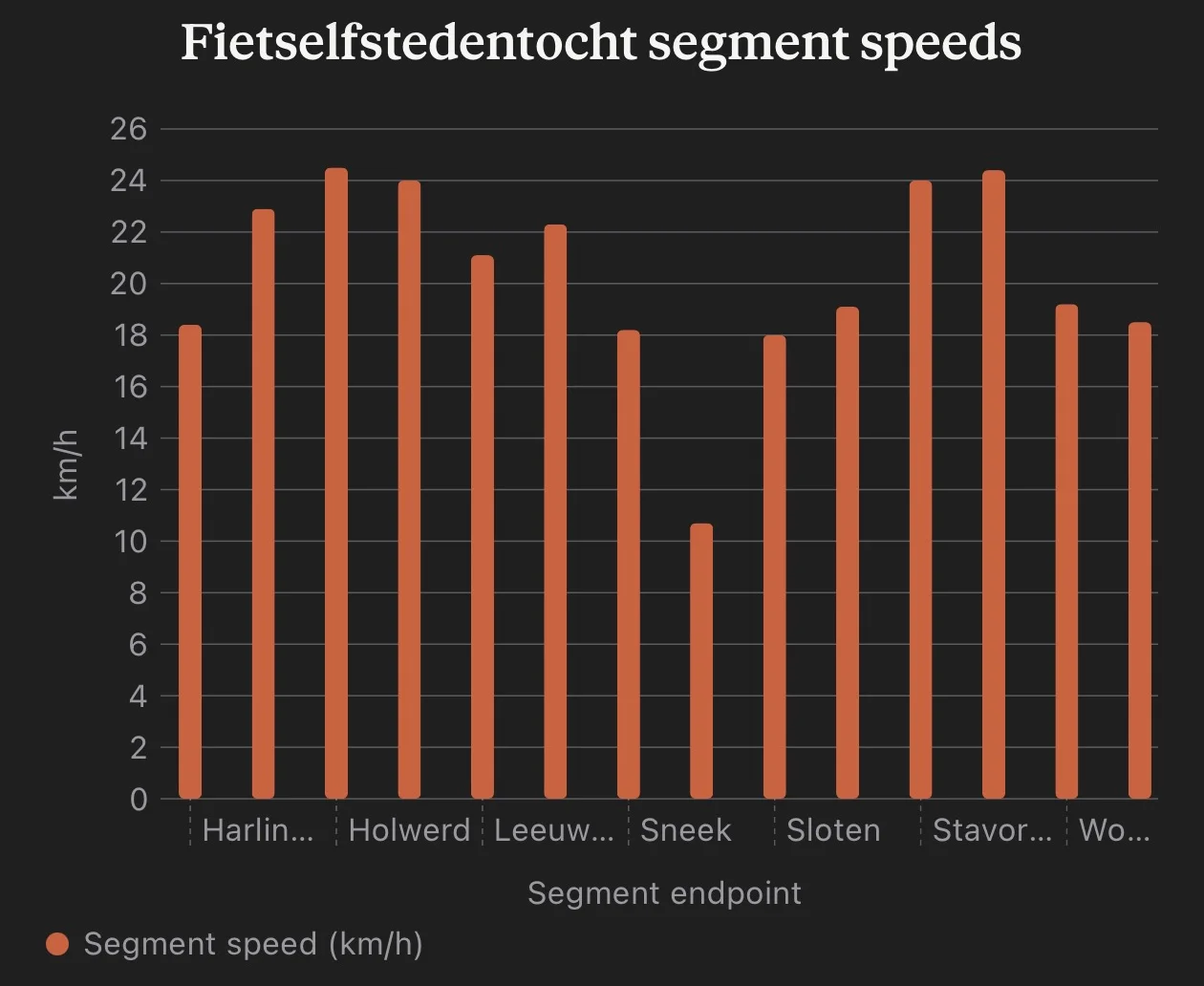
More, or other, data would not have made a difference for the performance, at most for bragging rights. I know I cycled at over 30 km/h, but with the "kluun and chat time" (Dutch for walking your bike, and talking) the average even on the fast segments is 25 km/h-ish. For post-analysis a GPS track would have been helpful, a power curve maybe. But the stamp card holds the time of every checkpoint, so the segment speeds came out anyway, on paper.
Last year I had all the data and I did not care about it. Now, without data, I was much more aware of my performance. I saw it during the ride too: trains of people riding fixated on, presumably, an arbitrary number on their screen. I passed them at 4 to 5 km/h faster. And not having to manage the data collection was wonderful! No charging, no pairing, no syncing. The WHOOP was not even empty after the trip, it recorded the whole day, the recovery and the journey home.
Breathing turned out to be the most important indicator of what is sustainable, I can cruise on an "in-in-out-out" rhythm. Heat is the other one, as I learned running the Leiden Marathon. Temperature is something you train for too, and I have come a long way there.
Conclusion
At the finish tent, big, seasoned men gave me a fist bump and a compliment on the bike and the pace. They could not keep up and the performance was "with style", they said. That is worth more than any Strava segment.
In Data versus Feeling I wrote that I hoped to know myself and my body well enough to perform without data. This tour was that moment. It is not that data is bad, it is that the feeling turned out to be the richer signal. Next up: a marathon in Cologne, on feel. Ha!