Writing · 3 Nov 2026
Looking Out the Window
Room to breathe is part of the performance
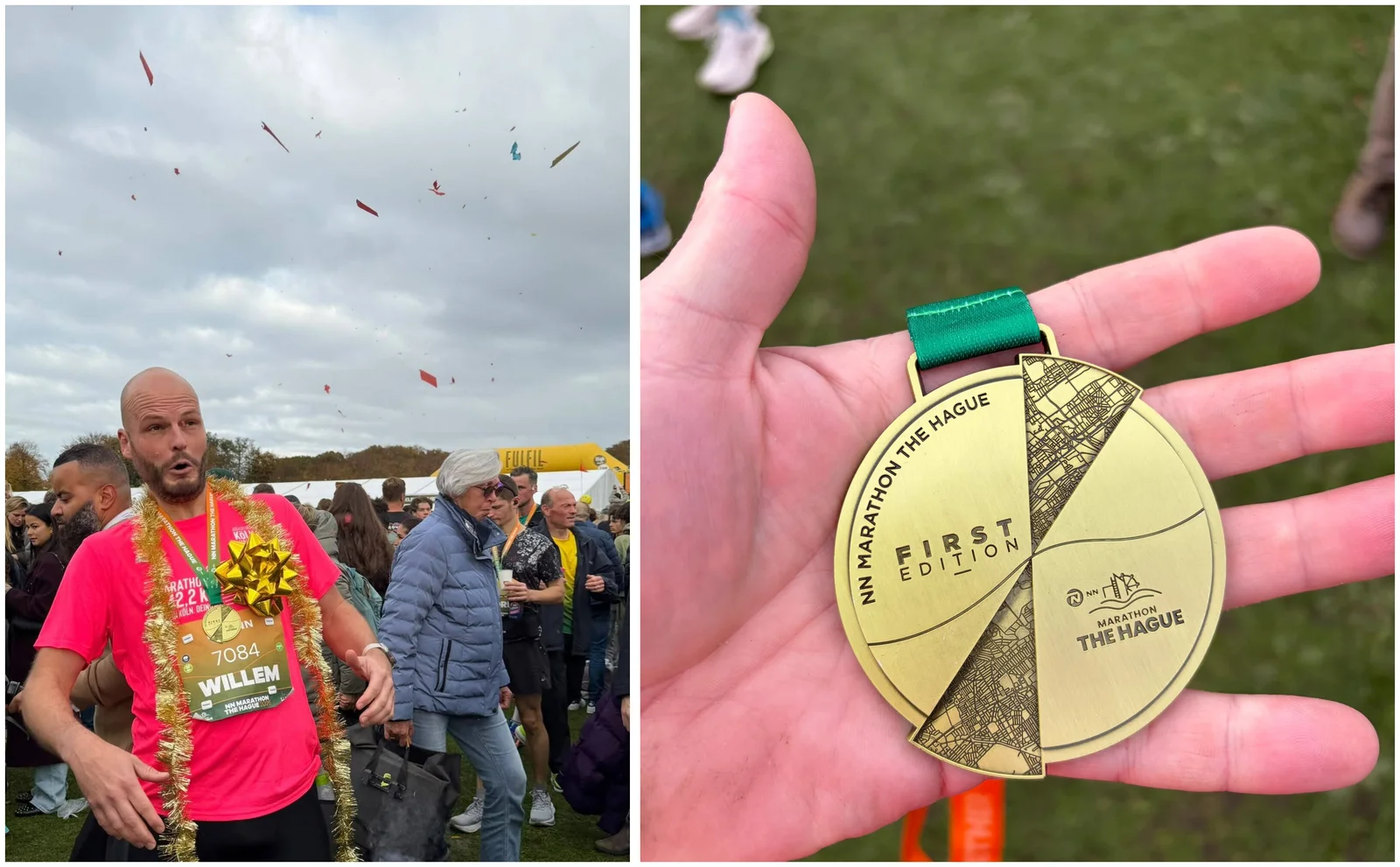
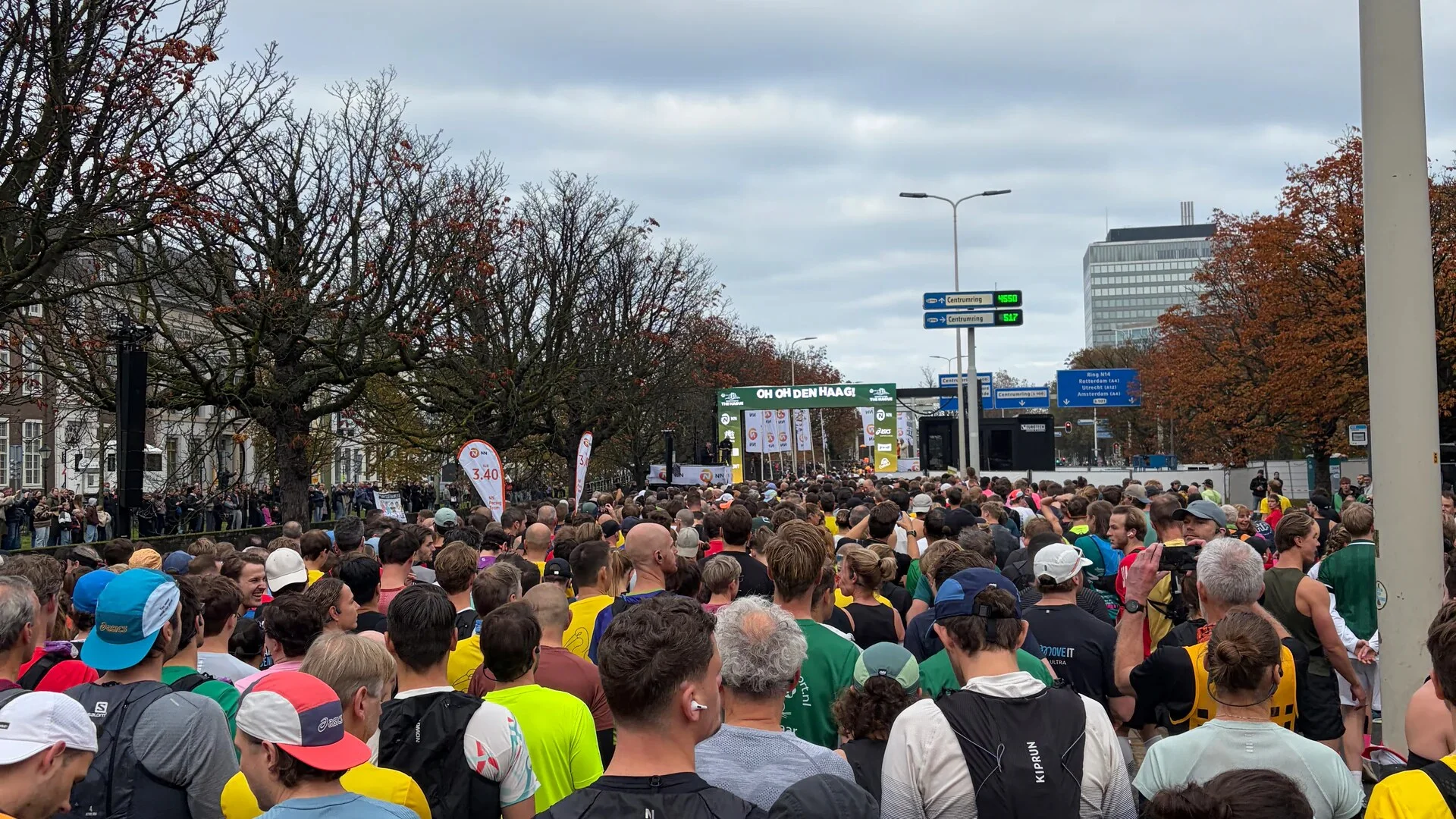
This weekend I ran the marathon of The Hague. I gave everything, and the result was 3 hours and 40 minutes. I am satisfied, because I know there was really nothing more in it. Tired legs, maximum heart rate, and still no collapse. It is beautiful that you can look for the limit like that. But the most important part of this marathon did not happen on the road. It happened in the weeks before, at home, looking out of the window.
Two marathons in four weeks
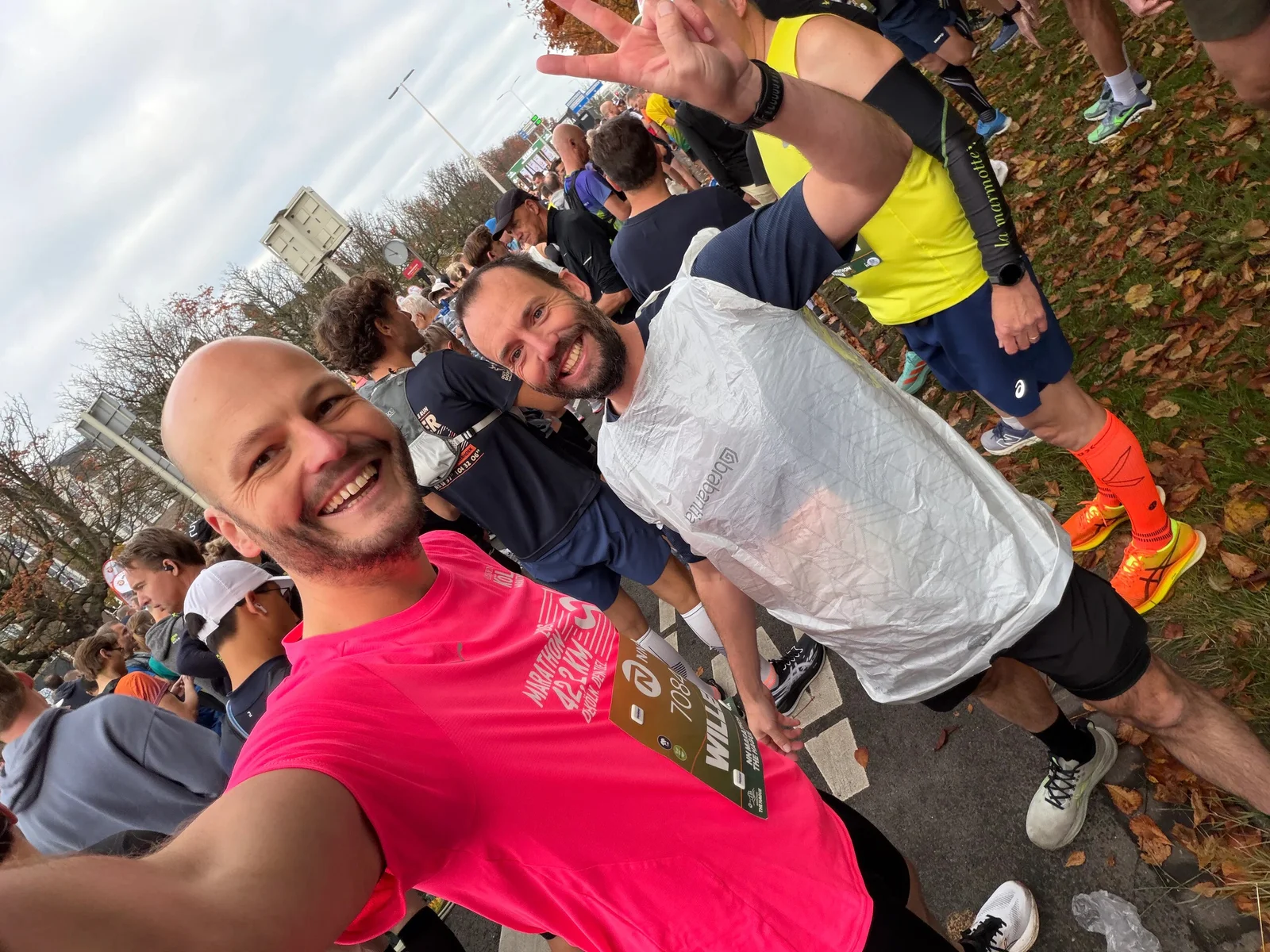
Four weeks earlier I ran Köln. Two days before the start my body was fighting a virus. I slept extra, stopped working and switched the computers off. The next afternoon I wrote: "the body is winning, energy is flowing through the veins again". Köln became 3:48:27.
The Hague went better in every way. The extra experience made it possible to operate longer at the maximum: eating, drinking and the mental side were better than ever. I understand very well now what makes the performance. And it is not only the training.
Work as a long run
At the end of October I wrote something less cheerful in my notes. Not only sport, but work too had taken on the character of a long run. Steady, long, without an end in sight. More than ever before, the balance tipped to the negative: no sparkling fun, warmth or pleasure. "It really is a marathon. I am physically, and mentally, ready for rest."
That is the trap of a pace you can hold: you can hold it so long that you forget you are running. The answer was not to stop. It was to stay pragmatic, limit the loss of energy, and focus on the things we want to influence. And nothing more.
Room to breathe
On 15 October I did something different. The phone on "do not disturb" and out of reach. Questions about the jam supply and the invoices came in, all very important, for later. Reachable for emergencies, but there was no emergency. I wrote: "The best in me comes up when there is room. This is not running away or hiding. It is a necessary pause to breathe."
Three days later, on a Sunday, I tried a whole day with zero screen time. A small experiment to feel where we still depend on it. Physical things stood out more: clutter, dust. Conversations with the children were easier, because I had so much more bandwidth to ask good questions. And I simply looked out of the window. I thought about my body, about the fast food of the day before, and about how little I really need. A green, orange or red light would be enough.
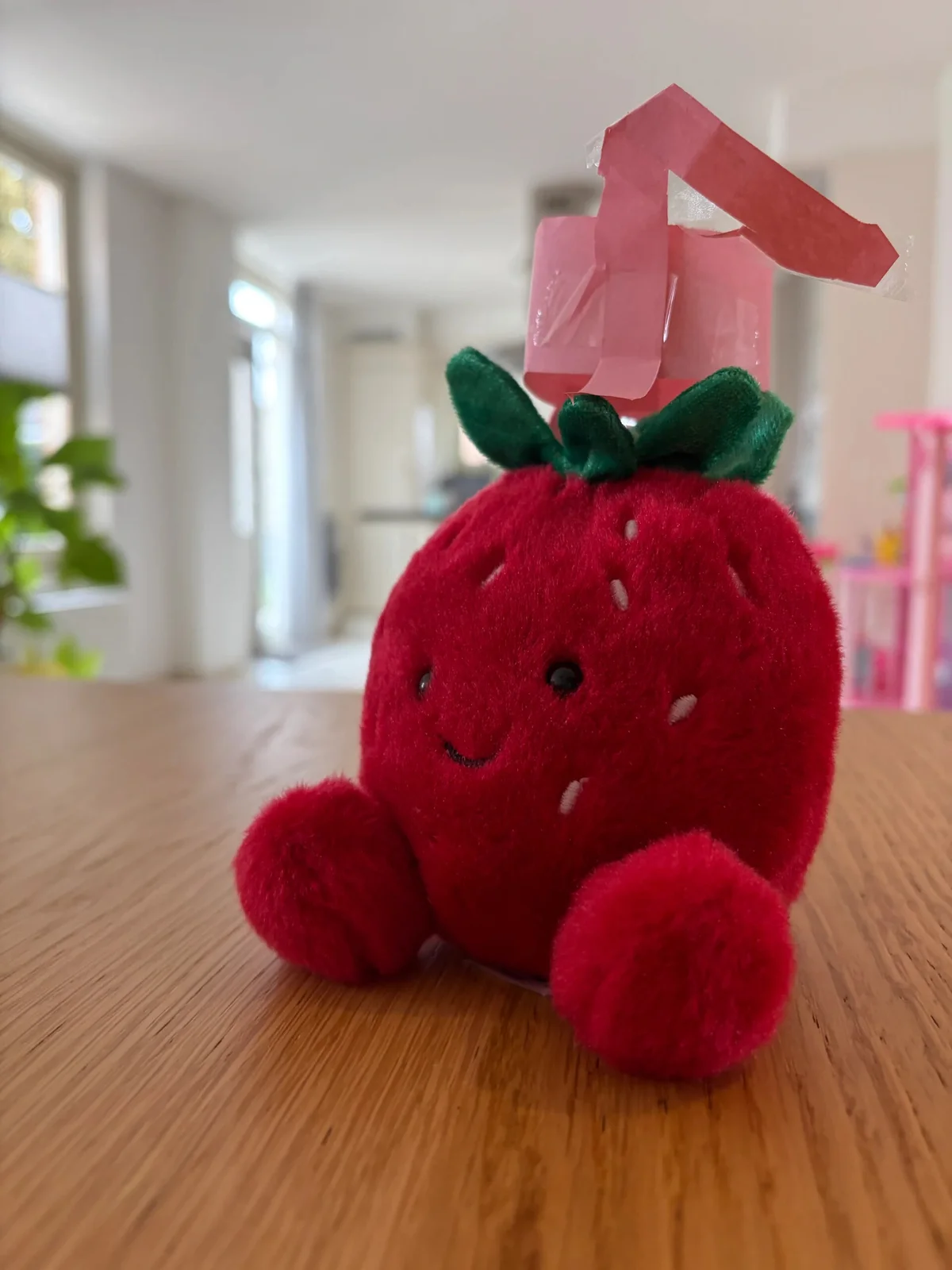
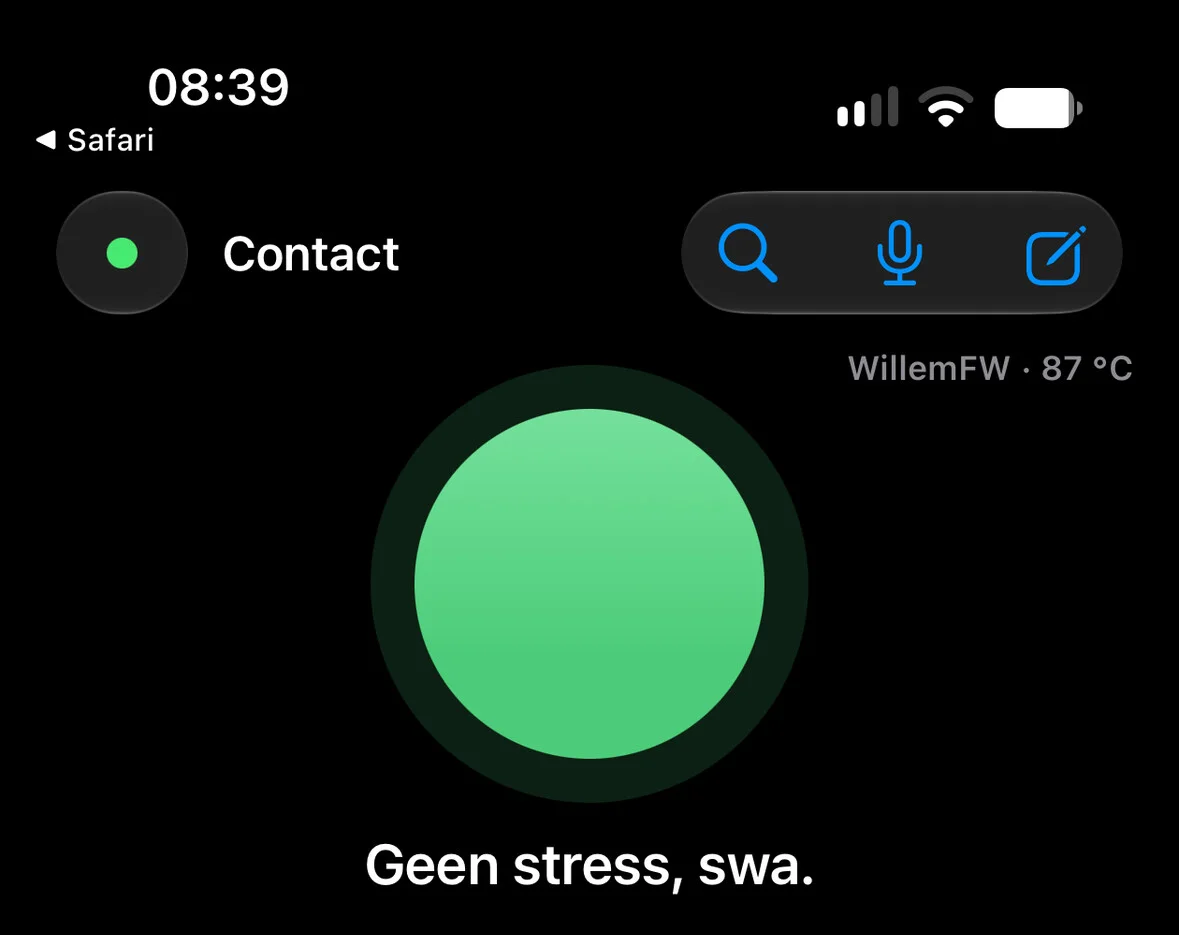
That light exists now. The home screen of Contact, the software I work with every day, is one dot. Green means: all is well, nothing is waiting for me. It took a Sunday without screens to see that one dot was enough.
Why a window works
Looking out of the window is not doing nothing. In 1984 Roger Ulrich published a small study in Science. Patients recovering from the same operation, in the same hospital, were given a room with a view of trees or a view of a brick wall. The ones looking at trees went home sooner, 7.96 days against 8.70, and needed fewer strong painkillers. A view, nothing more.
There is a name for designing with that in mind: biophilic design. Daylight, plants, wood, a view and a place to retreat to. I only learned the word properly this autumn, while building levendkantoor.nl for Martin Cuypers, a client in Venray, not far from home. Their page on what biophilic design is puts it in three layers: nature in the space, nature as a reference, nature as an experience. Reading it, I recognised my own Sunday. Wood under my hands, a plant by the window, daylight on the table. Nothing to buy. Just noticing.
As is, not add-on
The morning after The Hague I wrote down the conclusion. The gym is no longer "nice to have". We are making it an integral part again, on days that keep the impact on working hours small. The goal: a strong physical base, not as an add-on, but as is. Next year I want to break 3:30, and that can only happen if we make everything stronger, in all dimensions: strength training, sprints, and longer runs at low intensity, around 130 beats per minute.
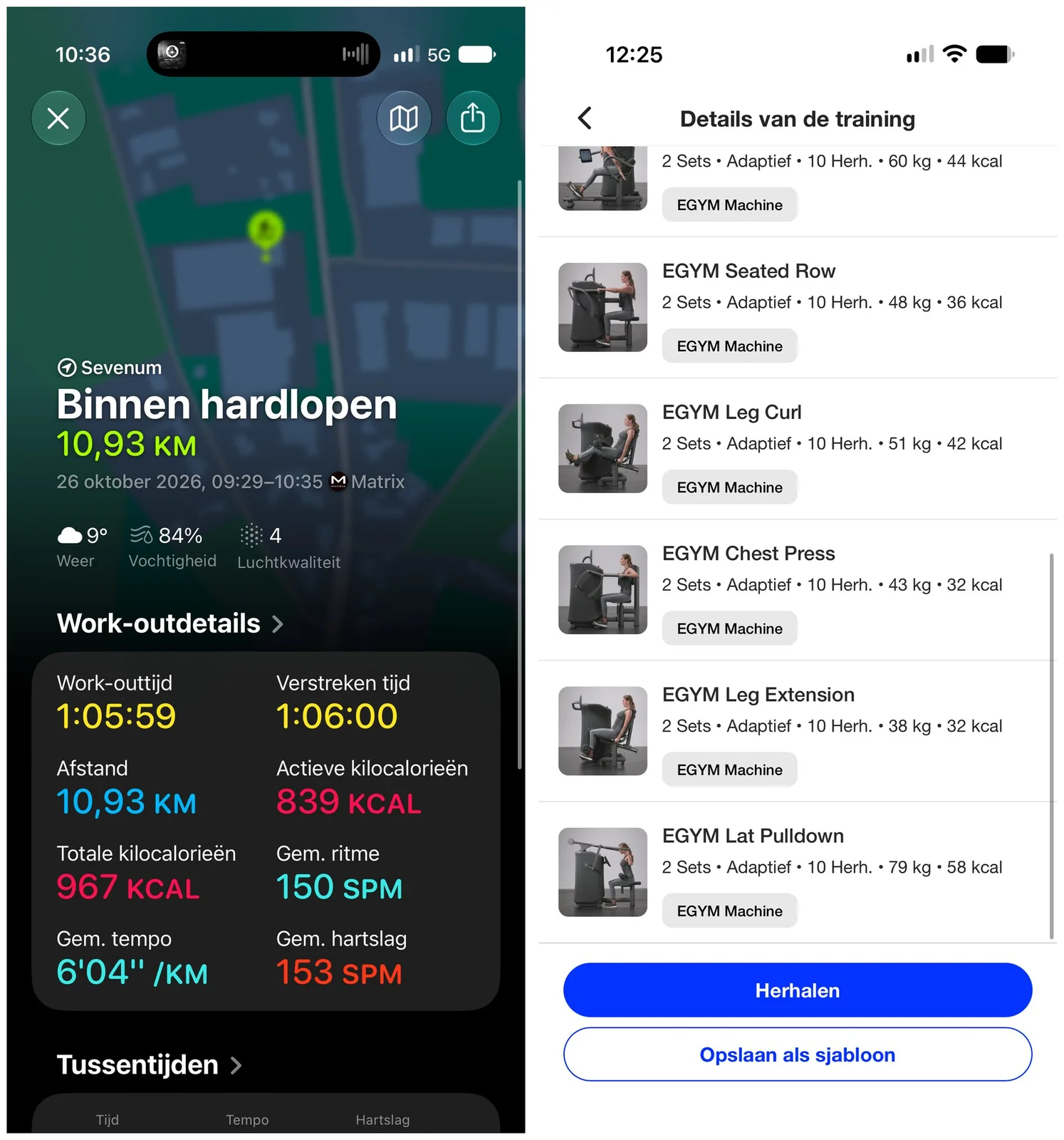
Last week I ran an hour on a treadmill, followed by a round on the machines. I loved it. An hour on such a thing asks for a different mindset, and that is exactly the point. Like the window and the green dot, it is not something extra on top of the work. It is what my work stands on, the foundation for thinking. I wrote about running before, in Marathon and in Run Nicely. This time the lesson is not in the legs.
Conclusion
Two marathons in four weeks taught me more about work than about running. The pace you can hold is not enough. You also need room: a morning without a phone, a Sunday without screens, a view of something alive. The best in me comes up when there is room, and that room is not a reward for after the finish. It is part of the training. There is one more race on the calendar this year, purely to finish, at a slower and conscious pace. First recover. And look out of the window a bit more, ha!